MD Anderson Study Reveals DNA Models' Strengths for Precision Medicine
December 3, 2025


A benchmarking study from MD Anderson Cancer Center evaluates five DNA foundation language models trained on genomic sequences to understand their strengths, weaknesses, and task suitability across genomics.
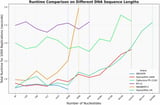
Researchers at MD Anderson conducted a comprehensive benchmark of five DNA language models to assess their strengths, weaknesses, and applicability to various genomic tasks.
The work, led by Chong Wu and Peng Wei in Nature Communications, shows that pre-training data, sequence length, and embedding summarization can shift performance as much as the model choice itself.
The study highlights potential applications in precision medicine, where choosing the right model for specific genomic tasks could tailor genetic testing and treatment, contingent on transparent benchmarking.
These results could inform precision medicine by guiding researchers and clinicians in selecting appropriate models for personalized genetic testing and treatment decisions.
Models demonstrated the ability to read long DNA sequences and identify potentially harmful mutations, with performance influenced by the species distribution in training data.
They also showed effectiveness on multi-species data, though results varied depending on which species were represented during training.
Some models excelled at recognizing genomic features, while others performed better on gene expression predictions, highlighting task-specific strengths and trade-offs.
Funding and support came from NIH and CPRIT; the full Nature Communications article provides detailed authorship and disclosures.
The evaluation covered 57 diverse datasets, assessing capabilities such as identifying genomic components, predicting gene expression levels, and detecting harmful mutations, including unseen queries.
Key methodological insights include the impact of training data composition (multi-species vs. human-only) and how embedding summarization approaches influence performance, sometimes as much as the architecture itself.
No single model dominates all tasks; each has task-specific strengths, suggesting a framework for selecting the most suitable DNA language model for a given genomic objective.
Citation: Feng et al., Benchmarking DNA foundation models for genomic and genetic tasks, Nature Communications (2025), DOI 10.1038/s41467-025-65823-8.
The article emphasizes the need for transparent, reproducible benchmarking to ensure safe and effective use of DNA language models in clinical decision-making.
Summary based on 2 sources
Get a daily email with more AI stories
Sources
Medical Xpress • Dec 2, 2025
Comparing DNA language models to guide optimal AI selection for genomics
MD Anderson Cancer Center • Dec 2, 2025
Study provides comprehensive insights into DNA language models