Revolutionizing Cancer Detection: Exosomes as Non-Invasive Biomarker Carriers for Liquid Biopsy Breakthrough
December 3, 2025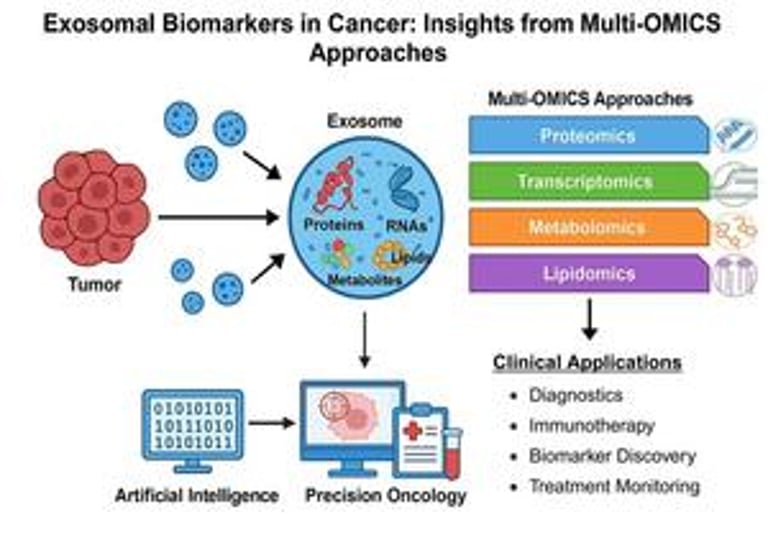


Global cancer burden is framed with data from 2022: about 20 million new cases and 10 million deaths, with roughly 53.5 million people alive within five years of diagnosis, underscoring the need for better diagnostics.
Context from IARC data highlights rising cancer cases and deaths to stress the urgency of improved diagnostic approaches.
Top researchers emphasize turning a simple blood test into a powerful diagnostic tool and shifting from invasive tissue biopsies to noninvasive liquid biopsies for ongoing disease tracking.
Practical implications include developing liquid biopsies for early detection, real-time treatment monitoring, relapse prediction, and using exosomes as natural drug delivery systems to improve efficacy and reduce side effects.
Clinical applications point to non-invasive liquid biopsies for early cancer detection, predicting tumor aggressiveness, monitoring therapy in real time, and relapse prediction, aiming to reduce the need for tissue biopsies.
A comprehensive literature review analyzes exosomes as carriers of cancer biomarkers and explains how multi-omics and AI can decode their molecular cargo to enable early, non-invasive cancer detection through blood or urine tests.
Led by Mohammad Harb Semreen and Fatima Maher Al-Daffaie at the University of Sharjah, the study synthesizes findings from over 100 studies from 2018 to 2025 and highlights four major associations in exosome biology and cancer diagnostics.
Exosomes circulate in body fluids and reflect tumor biology, carrying proteins, nucleic acids, lipids, and metabolites that change with cancer, enabling potential liquid biopsies for early detection and monitoring treatment response.
The review advocates a multi-omics approach—proteomics, transcriptomics, metabolomics, and lipidomics—combined with AI to identify clinically meaningful cancer signals.
Integrating multi-omics data with AI is highlighted as key to identifying reliable biomarkers and understanding cancer communication, growth, and therapy resistance.
Exosomes influence tumor spread, immune evasion, and drug resistance, making them both messengers and potential therapeutic targets or delivery vehicles for precise cancer treatment.
Two promising directions are exosome-based liquid biopsies for early detection and treatment monitoring, and engineering exosomes as targeted drug delivery vehicles for precision therapy.
Industry interest is growing, though formal collaborations had not yet been established at the time, with exosome-based diagnostics drawing substantial investment in precision medicine.
The article, a systematic review published in Clinica Chimica Acta as Exosomal biomarkers in cancer: Insights from Multi-OMIC approaches (dated January 15, 2026), frames these findings.
There is growing industry and healthcare interest, with anticipated partnerships to translate these findings into clinical diagnostics and personalized monitoring tools.
Summary based on 2 sources
Get a daily email with more AI stories
Sources
EurekAlert! • Dec 2, 2025
The future of cancer detection could be just a blood test away, say scientists
Medical Xpress • Dec 2, 2025
The future of cancer detection could be just a blood test away, say scientists