Breakthrough Discovery: Mouse Hippocampus Reveals Four Distinct Neuron Layers, Aiding Memory and Disease Research
December 3, 2025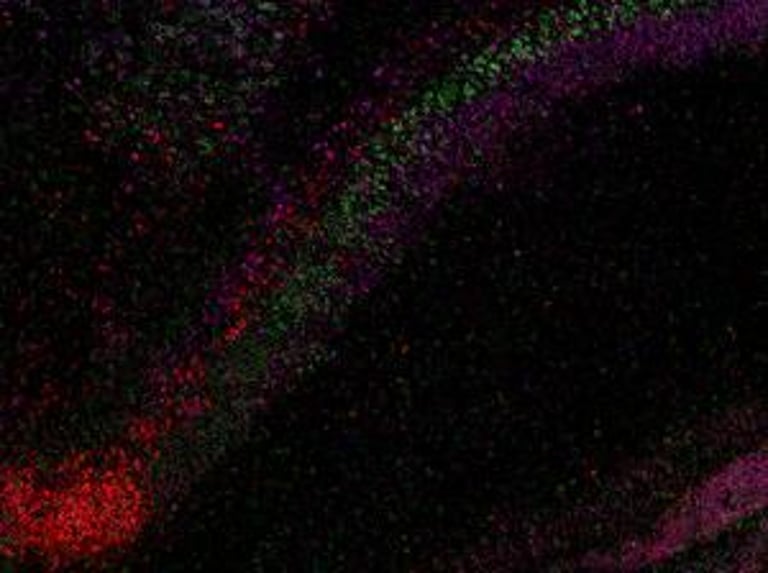

A USC-led study in Nature Communications reveals that the CA1 region of the mouse hippocampus contains four distinct, continuous layers of neuron types, each with a unique molecular signature, establishing a structured laminar organization previously unrecognized in this memory-related brain area.
Each CA1 layer is defined by its own molecular signature and forms continuous, slightly shifting bands along the hippocampus, creating a layered pattern rather than a uniform mosaic.
The study identifies four CA1 subregions—CA1d, CA1i, CA1v, and CA1vv—organized by laminar gene expression patterns, providing a framework for studying hippocampal cell types across species.
Building on the CA1 cell-type atlas from the Hippocampus Gene Expression Atlas, researchers offer openly accessible resources with interactive 3D visualizations via the Schol-AR augmented-reality app to explore hippocampal layers.
Using RNAscope high-resolution RNA labeling and single-cell analysis, researchers mapped more than 330,000 RNA molecules across 58,065 CA1 pyramidal cells to delineate the four neuron-type bands and their varying thickness along the hippocampus.
The high-resolution imaging captured over 330,000 RNA molecules across CA1 pyramidal neurons, enabling a detailed cell-type atlas and borders between neuron-type bands.
In total, the study mapped more than 58,000 CA1 pyramidal neurons, creating a comprehensive atlas of cell types and their spatial distribution within the four-layer architecture.
The layered CA1 architecture helps explain why different parts of CA1 support distinct learning and memory functions and why certain neuron types may be more vulnerable in diseases like Alzheimer’s and epilepsy, guiding targeted translational research.
Key quotes frame the layered structure as geological strata, revealing neuron-type differences and providing a framework to link memory, navigation, emotion, and disease vulnerability.
This layered organization could account for selective neuron vulnerability in Alzheimer's and epilepsy, and may steer translational research toward targeted therapies.
The findings suggest the layered organization of CA1 might be a common feature across mammalian brains, potentially informing comparative studies and therapeutic strategies for memory-related disorders.
If conserved in primates and humans, the CA1 layering offers a foundation for translational research in memory and cognition, though further human-focused validation is needed.
Researchers emphasize that linking specific neuron layers to behavior is the next frontier, with implications for memory, navigation, emotion, and understanding disease mechanisms.
Led by Michael S. Bienkowski and colleagues, the work was funded by NIH/NIA, NSF, USC centers, and NIH OER data support, with researchers anticipating future translational studies on memory and cognition based on this architecture.
Summary based on 3 sources
Get a daily email with more Science stories
Sources
EurekAlert! • Dec 3, 2025
USC study reveals hidden cellular layers in the brain’s memory center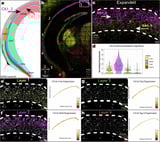
Medical Xpress • Dec 3, 2025
Hidden cellular layers revealed in brain's memory center
Neuroscience News • Dec 3, 2025
Hidden Brain Layers Revealed in Key Memory Center