Breast Cancer Discovery: MPG Protein Key to Lymphatic Spread, Offers New Therapy Target
December 3, 2025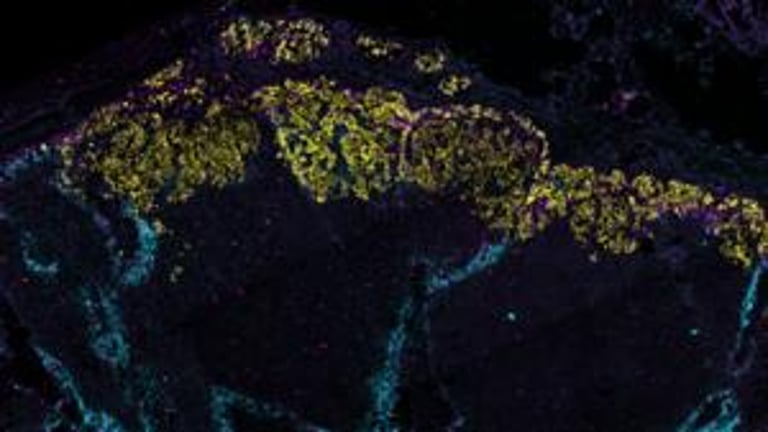

Breast cancer remodels lymphatic vessels to facilitate spread to draining lymph nodes and beyond, a process demonstrated by researchers from the University of Turku, Turku University Hospital and InFLAMES Flagship.
The study, published in Nature Communications under the title Breast cancer remodels lymphatics in sentinel lymph nodes, provides new insight into metastatic spread and potential targeted therapies to prevent metastasis and improve outcomes.
A key finding is the upregulation of Matrix Gla protein (MPG) in metastatic lymph nodes, which cancer cells appear to use to bind to lymphatic vessels, a role not previously linked to MPG in lymphatics.
MPG is elevated in metastatic, but not normal distant lymph nodes, indicating a targeted role in cancer-associated lymphatic remodeling and offering a potential therapeutic target to prevent spread.
A specific protein, Matrix Gla protein (MPG), was identified as upregulated in metastatic lymph nodes and seems to enable cancer cells to bind to lymphatic vessels, a novel link between MPG and lymphatic remodeling.
MPG is involved in bone formation in other contexts, but its role in lymphatic vessels reveals a new mechanism of metastasis.
The selective upregulation of MPG in metastatic sites, not in normal distant lymph nodes of the same patients, supports its potential as a therapy target to prevent spread.
The study was published in Nature Communications on December 3, 2025.
Early detection of breast cancer remains crucial, as it improves prognosis and treatment outcomes.
Breast cancer is still a major global health issue, with Finland reporting more than 5,000 new cases annually and five-year survival around 90%, underscoring the impact of early diagnosis and advances in treatment.
Overall context: breast cancer ranks among the most common cancers in women worldwide, and continued emphasis on early detection and improved therapies is vital.
Summary based on 4 sources
Get a daily email with more Science stories
Sources

EurekAlert! • Dec 3, 2025
Breast cancer remodels lymphatic vessels to accelerate its spreading
Medical Xpress • Dec 3, 2025
Breast cancer remodels lymphatic vessels to accelerate its spread, research reveals
News-Medical • Dec 3, 2025
Breast cancer reshapes lymphatic vessels to support its spread
University of Turku • Dec 3, 2025
Breast cancer remodels lymphatic vessels to accelerate its spreading | University of Turku