Breakthrough Study Links GPX4 Mutation to Early-Onset Dementia, Offers Hope with Ferroptosis Inhibitors
December 4, 2025

Findings were published in the journal Cell and are disseminated through outlets such as Mirage News.
The study emphasizes basic, long-term research with potential therapeutic implications and highlights the value of international collaboration and sustained funding for complex neurodegenerative diseases.
Early experiments show ferroptosis inhibitors can slow cell death in cultured neurons and mouse models, offering proof of concept for potential therapies, though no treatment exists yet.
Researchers studied three U.S. children with the R152H mutation, reprogrammed their cells into stem-like states, and generated cortical neurons and brain organoids to explore the mechanism in vitro.
The Cell paper, published on December 4, 2025, is titled A fin-loop-like structure in GPX4 underlies neuroprotection from ferroptosis.
A GPX4 fin-loop is crucial for protecting neurons by detoxifying lipid peroxides; the R152H mutation disrupts this membrane insertion, enabling lipid peroxide buildup and ferroptosis-driven neuronal death.
A multinational team led by a prominent professor shows that ferroptosis can drive human neurodegeneration, with the GPX4 R152H mutation causing severe early-onset dementia in children.
In affected children, the single GPX4 mutation interrupts the enzyme’s membrane-insertion fin, allowing lipid peroxides to accumulate and trigger ferroptotic cell death.
The research involved major institutions including Helmholtz Munich, Technical University of Munich, and LMU University Hospital Munich, employing patient-derived cells, stem-cell techniques, and mouse genetics.
Mouse models carrying the R152H mutation showed motor deficits, neuron loss in cortex and cerebellum, and brain inflammation, mirroring human disease and similar patterns to Alzheimer's pathology.
Proteomic analyses in these mice revealed alterations resembling Alzheimer's-related changes, suggesting ferroptotic stress could contribute to both rare early-onset dementia and more common dementias.
Overall, the work shifts focus toward membrane lipid damage and ferroptosis as drivers of neurodegeneration, with ferroptosis inhibitors slowing neuronal death in vitro and in mice, signaling a potential therapeutic path while not yet offering a therapy.
Summary based on 3 sources
Get a daily email with more Science stories
Sources

EurekAlert! • Dec 4, 2025
Single enzyme failure found to drive neuron loss in dementia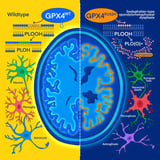
Medical Xpress • Dec 4, 2025
Single enzyme failure found to drive neuron loss in dementia
Mirage News • Dec 4, 2025
Enzyme Failure Linked to Neuron Loss in Dementia