Error-Prone DNA Repair Pathway Offers New Target for Cancer Therapy
December 4, 2025

In SETX-deficient cancer cells, BIR rapidly copies large DNA segments to patch breaks, but its error-prone nature contributes to genomic instability while supporting cell survival.
The article emphasizes translational potential and ongoing work rather than presenting a finished clinical therapy.
Beyond SETX mutations, oncogene activation or hormone signaling may raise R-loop levels, broadening the potential applicability of BIR-targeted strategies.
The research indicates cancer cells lacking SETX rely on BIR to fix double-strand breaks associated with accumulating R-loops.
The authors acknowledge NIH support and note affiliations with Scripps Research and UC San Diego contributors.
A new study shows break-induced replication (BIR) as a backup, error-prone DNA repair pathway that kicks in when SETX is deficient and R-loop levels are high, especially at double-strand breaks.
Researchers aim to develop inhibitors of the key BIR factors with suitable activity and low toxicity, and to identify tumors with high R-loop burden as candidates for such therapies.
Efforts will focus on developing inhibitors for BIR components and selecting tumor types with dangerous R-loop levels to optimize candidate therapies.
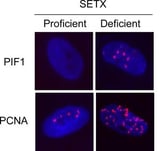
The study shows SETX-deficient cells become highly dependent on BIR factors like PIF1, RAD52, and XPF, presenting potential targets for selective cancer treatment.
Importantly, blocking BIR in SETX-deficient contexts can be synthetically lethal to cancer cells, suggesting a route to selective therapy.
Next steps include identifying cancer types with elevated R-loops and validating which tumors are most susceptible to BIR-targeted approaches.
The study suggests tumors accumulating R-loops through various mechanisms, not just SETX mutations, could be targets for BIR-directed therapy.
Summary based on 4 sources
Get a daily email with more Science stories
Sources
EurekAlert! • Dec 3, 2025
Scientists find cancer weak spot in backup DNA repair system
Medical Xpress • Dec 4, 2025
Backup DNA repair system could be cancer's weak spot
News-Medical • Dec 4, 2025
Scientists uncover why SETX-deficient cancer cells rely on error-prone DNA repair
Mirage News • Dec 4, 2025
Cancer's Weak Spot Found in Backup DNA Repair System