Breakthrough Mouse Model Mimics Egg Aging, Promising Advances in Fertility Science
December 5, 2025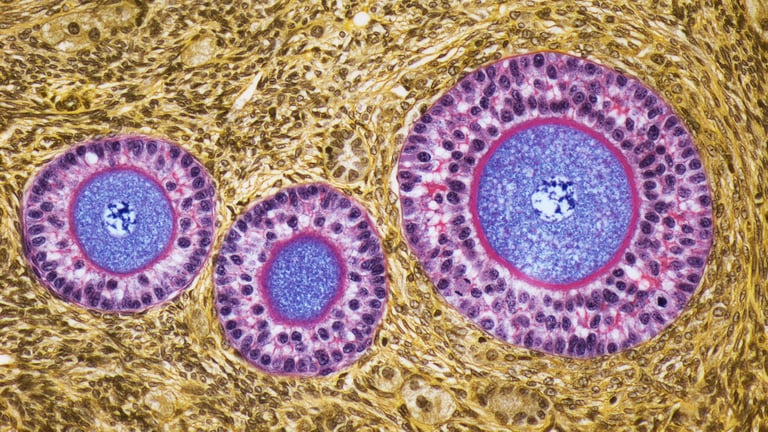

A new mouse egg model replicates aging-like changes to study why human eggs increasingly develop chromosomal errors with age, without needing aged human eggs or waiting for mice to age.
The findings suggest that breaking the chromosomes’ molecular glue is a major driver of age-related aneuploidy, though real aging likely results from multiple interacting factors in a cumulative process.
Researchers use CRISPR to insert a controllable degradation switch in REC8, a core component of the chromosomal glue, enabling aging-like changes in eggs within about an hour to a day.
The model could be used to test preventive measures and therapies aimed at reducing chromosomal errors in eggs, with potential benefits for women planning pregnancies later in life.
Degrading REC8 to different extents raises chromosomal mis-segregation and aneuploidy, revealing a threshold where error rates spike and indicating a breakdown of the chromosome-separating machinery as eggs age.
In addition to REC8, researchers perturb other cohesion proteins and the separating filaments to model multiple aging-related declines and amplify error rates.
The mouse model provides a consistent, ethical platform to study egg aging and to screen treatments that could extend the reproductive window or improve egg quality in IVF.
Summary based on 1 source
Get a daily email with more Science stories
Source
Live Science • Dec 5, 2025
Could aging eggs be 'rejuvenated'? New tool may help pave the way to fertility-extending treatments