3D Models Revolutionize Heart Procedure, Tailoring Treatment for Atrial Fibrillation Patients
January 18, 2026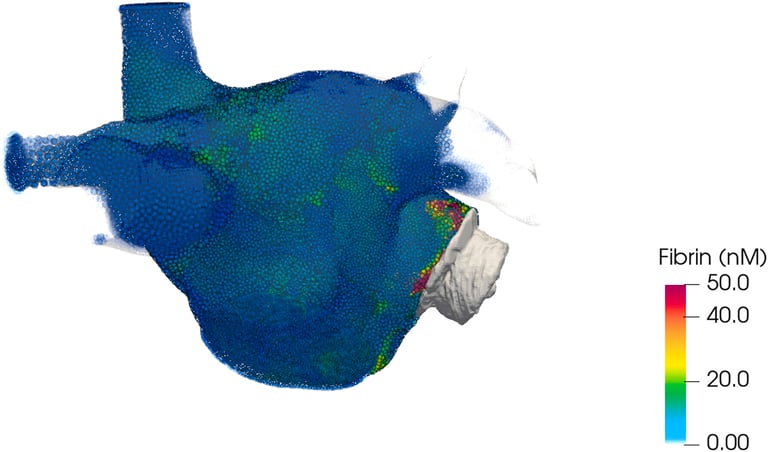

At Hospital Clínic de Barcelona, clinicians can leverage a patient-specific 3D computational model to enhance precision in planning left atrial appendage occlusion device placement and tailor postoperative anticoagulation, potentially reducing risks and improving safety.
The proof-of-concept centered on a 78-year-old patient with atrial fibrillation and prior stroke, demonstrating how the model can identify the optimal device position and initial anticoagulant needs, with plans to expand testing to more patients.
Atrial fibrillation raises the risk of thrombi and stroke, and while anticoagulants mitigate this risk, they carry bleeding risks; a left atrial appendage occlusion device offers an alternative that could reduce reliance on anticoagulants.
UPF researchers developed a CT-based, patient-specific 3D model to optimize device placement and customize anticoagulant management across preoperative, intraoperative, and postoperative stages.
The integrated model predicts the best device position and dosing, with the proof-of-concept case published in JACC: Case Reports as a pioneering first for this application.
If validated in larger studies, the model could support preoperative planning, intraoperative guidance, and postoperative management for patients undergoing left atrial appendage occlusion.
Anticoagulants should not be stopped immediately after device placement due to thrombus risk, but can be gradually reduced and possibly discontinued as the patient adapts.
Summary based on 1 source
Get a daily email with more Health stories
Source
Medical Xpress • Jan 18, 2026
Heart computational model can help doctors operate on and treat patients with arrhythmia