Breakthrough Parkinson's Treatment: CS2 Restores Mitochondrial Health, Enhances Mobility and Cognition
January 20, 2026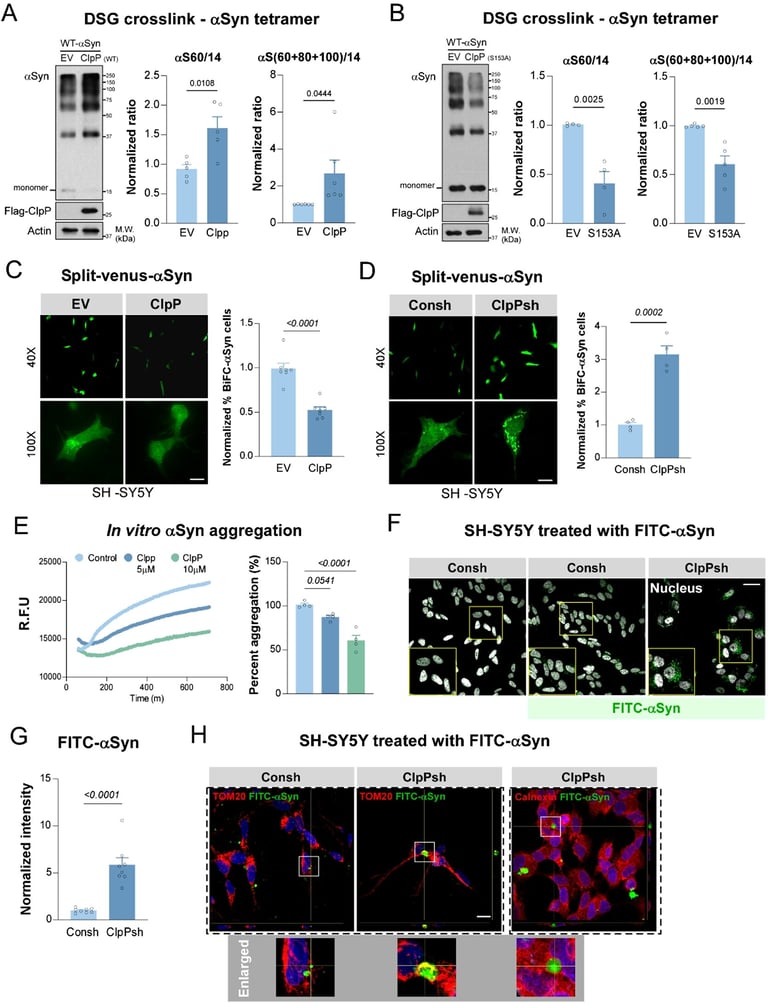

The study is published by Di Hu et al. in Molecular Neurodegeneration (2025), with the DOI 10.1186/s13024-025-00918-w.
The discovery signals a shift toward protecting mitochondrial health to tackle root causes, rather than solely alleviating symptoms.
This work points to a potential new therapeutic target by disrupting the alpha-synuclein–ClpP interaction to protect mitochondria and neuronal health.
Researchers plan to move toward clinical trials within five years, focusing on optimizing CS2 for humans, safety and efficacy testing, biomarker identification, and translation to patient care.
The team highlights multidisciplinary strengths and concrete next steps to advance CS2 toward clinical translation and human testing within five years.
Case Western Reserve University researchers identify a harmful interaction between alpha-synuclein and the mitochondrial protein ClpP that impairs mitochondria and accelerates neuron death in Parkinson’s disease.
CS2 not only improves mitochondrial health but also enhances mobility and cognitive performance in study models, suggesting potential disease-modifying effects beyond symptom relief.
Across multiple models, CS2 reduced harmful protein forms and restored neuronal signaling in cells exposed to alpha-synuclein clumps, while rescuing mitochondrial function and cellular structure in patient-derived dopamine neurons with familial Parkinson’s mutations.
Lead author Xin Qi and collaborators note this represents a fundamentally new strategy for Parkinson’s treatment by focusing on underlying disease mechanisms.
A designed treatment named CS2 acts as a decoy that lures alpha-synuclein away from the mitochondrial enzyme ClpP, restoring mitochondrial function and reducing brain inflammation across human brain tissue, patient-derived neurons, and mouse models.
Lead author Di Hu and colleagues emphasize that this approach targets a root cause of Parkinson’s disease rather than merely addressing symptoms.
In a Parkinson’s mouse model, six months of CS2 treatment improved motor coordination, spatial memory, restored ClpP levels, reduced alpha-synuclein clumps, and lowered brain inflammation compared with controls.
Summary based on 4 sources
Get a daily email with more Science stories
Sources

ScienceDaily • Jan 20, 2026
Scientists identify hidden protein interaction driving Parkinson’s disease
Medical Xpress • Jan 20, 2026
Potential new target to treat Parkinson's disease discovered
News-Medical • Jan 20, 2026
Researchers discover a biochemical route that plays role in Parkinson's disease
ScienceBlog.com • Jan 20, 2026
Researchers Restore Dying Parkinson’s Brain Cells by Blocking Protein Interaction