Breakthrough Study Reveals MYC's Role in Pancreatic Cancer Immune Evasion, Offers New Therapy Pathways
January 22, 2026

Researchers caution that more work is needed to understand how RNA–DNA hybrids are transported out of the nucleus and how MYC’s RNA-binding impacts the tumor microenvironment before clinic-ready therapies emerge.
The KOODAC study was led by Martin Eilers and involved collaborators from the University of Würzburg, MIT, and Würzburg University Hospital, with funding from Cancer Research UK, Kika, INCa, and an ERC Advanced Grant.
Funding and collaboration details: the team, headed by Martin Eilers, partnered with MIT and Würzburg institutions, supported by Cancer Research UK, Kika, INCa, and the European Research Council.
Overall leadership and collaboration included Martin Eilers and teams from Würzburg and MIT, backed by multiple funding bodies including CRUK, Kika, INCa, and ERC.
A international research team reports in Cell that the MYC oncoprotein has a dual role in pancreatic cancer: it promotes tumor growth through DNA binding while also helping tumors evade immune detection by binding RNA under stress, forming protein–RNA condensates that recruit the exosome complex to degrade RNA–DNA hybrids and blunt immune alarm signals.
The immune camouflage hinges on MYC's RNA-binding region, a function distinct from its DNA-driven growth activity, suggesting a targeted therapeutic angle.
In animal experiments, engineering MYC with a defective RNA-binding region caused tumors to shrink by about 94% in 28 days, but only in animals with intact immune systems, underscoring the immune-dependent nature of the effect.
When MYC’s RNA-binding was disabled in pancreatic cancer models, exosome-assisted degradation of RNA–DNA hybrids was blocked and pancreatic tumors grew 24-fold with normal MYC but collapsed by 94% without RNA binding, in immunocompetent hosts.
Further, tumors with the defective RNA-binding region failed to recruit the exosome and did not trigger the immune alarm pathway, leading to dramatic tumor reduction over four weeks in immunocompetent animals.
This MYC-driven immune camouflage suppresses alarm signals, enabling tumors to grow without being detected by the immune system.
The study highlights a potential shift in cancer therapy: rather than blanketly inhibiting MYC, therapies might aim to reveal tumors to the immune system by targeting its RNA-binding–mediated camouflage.
Summary based on 4 sources
Get a daily email with more Science stories
Sources

EurekAlert! • Jan 22, 2026
Decoded: How cancer cells protect themselves from the immune system
Medical Xpress • Jan 22, 2026
How pancreatic tumors use the MYC protein to evade immune detection
News-Medical • Jan 22, 2026
Researchers decipher a key mechanism that controls pancreatic cancer growth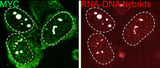
Mirage News • Jan 22, 2026
Decoded: Cancer Cells' Defense Against Immune System