AI-Powered Study Reveals Five Human Chronotypes, Challenging Traditional Sleep Categories
February 3, 2026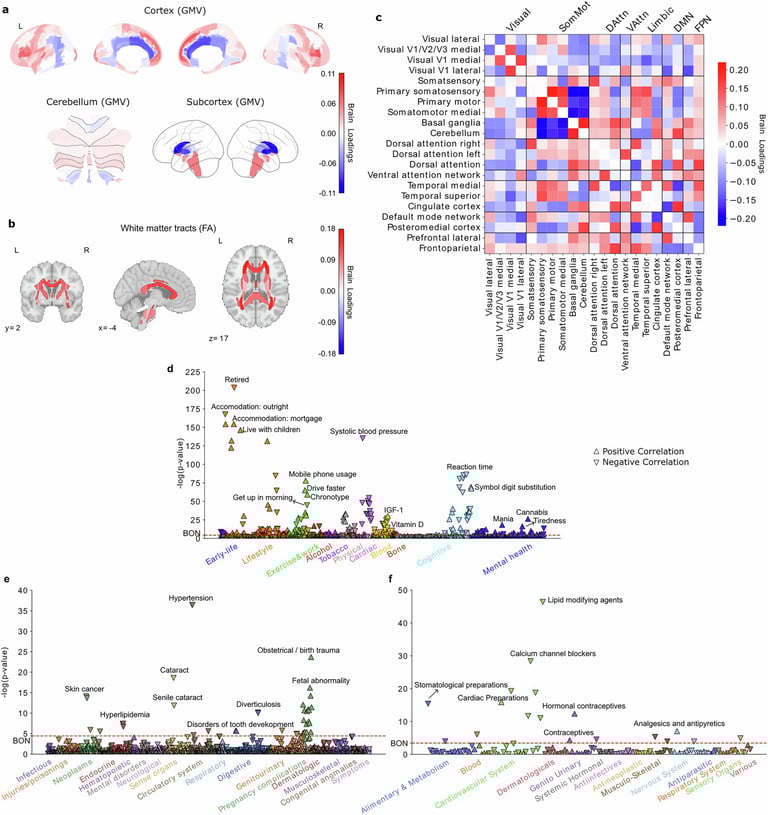

The study and its funding/support came from multiple sources, including Brain Canada Foundation, NIH, CIHR, CIFAR, Google, and others, with collaboration across McConnell Brain Imaging Centre and institutions in Montréal and Oxford.
Researchers plan to add genetic data to determine whether chronotype subtypes have birth-level biological roots, seeking to understand their origins from birth.
A McGill-led study published in Nature Communications identifies five distinct human chronotypes—three types of night owls and two types of early birds—by integrating AI, brain imaging, questionnaires, and medical records from over 27,000 UK Biobank participants.
Publication details: Le Zhou et al., Latent brain subtypes of chronotype reveal unique behavioral and health profiles across population cohorts, Nature Communications (2025).
One early-bird group shows minimal health problems, while another is closely linked to depression, illustrating nuanced chronotype-health associations.
Using AI to combine diverse data from more than 27,000 UK Biobank participants, researchers found five subtypes, each with unique health and behavioral profiles, challenging the traditional night-owl vs. early-bird framing.
The study emphasizes that traditional sleep categories are insufficient, uncovering subtypes that reflect a complex mix of genetics, environment, and lifestyle.
Senior author notes that the subtypes arise from a complex interaction of multiple factors beyond bedtime and wake times.
Lead author reframes questions from whether night owls are at risk to which night-owl subtype is more vulnerable and why.
The research argues for personalized sleep guidance, work scheduling, and mental health support, recognizing diverse chronotypes in modern society.
Findings suggest health risks and strengths are distributed across the five profiles, challenging one-size-fits-all views of sleep health.
Five chronotype subtypes correlate with distinct behavioral patterns and health risks, not a simple binary; some subtypes show cognitive strengths with emotional regulation challenges, others with risk-taking or higher depression, heart disease, or smoking risk.
Summary based on 3 sources
Get a daily email with more Science stories
Sources

Newsroom • Feb 2, 2026
Night owl or early bird? Study finds sleep categories aren’t that simple
Medical Xpress • Feb 2, 2026
Night owl or early bird? Study finds sleep categories aren't that simple
News-Medical • Feb 3, 2026
Study finds five distinct human sleep chronotypes