Wildfire Smoke PM2.5 Linked to 24,100 Annual Deaths in U.S., Study Urges Stronger Climate Action
February 4, 2026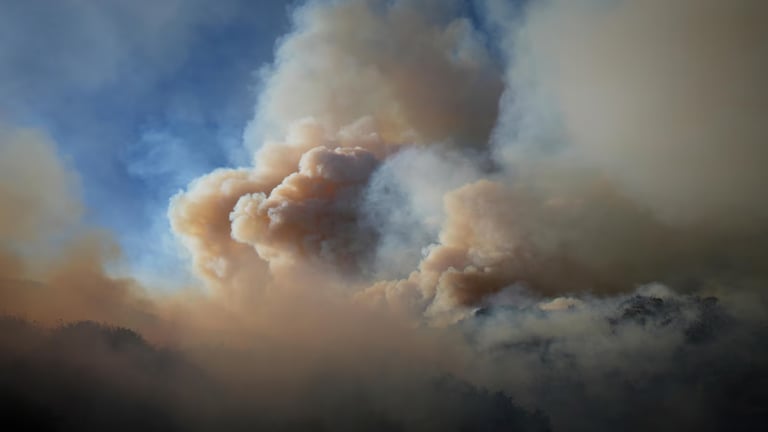


The piece places findings in a broader policy context, calling out climate policy rollbacks and urging mitigation strategies to reduce health losses from wildfire smoke.
A new study finds that mortality from wildfire smoke–related PM2.5 varies by season and demographics, with stronger effects in cooler periods and in rural or younger communities, and approximately 5,594 additional deaths per year per 0.1 μg/m³ increase in wildfire-derived PM2.5 across the studied counties.
Across the contiguous United States from 2006 to 2020, wildfire smoke PM2.5 exposure is linked to about 24,100 deaths annually, according to a Science Advances study.
The study highlights that wildfire smoke contributes disproportionately to PM2.5 and that its health impact is amplified by increasing wildfire frequency and intensity tied to climate change.
Experts say the findings are plausible but acknowledge limitations, including county-level aggregation and unaccounted factors like smoking, and they advocate for more diverse studies to strengthen confidence.
Scholars outside the study view the results as reasonable and emphasize the growing health threat from wildfire smoke driven by climate change and forest mismanagement, calling for further research with varied designs.
Context notes that forest management, urban-wildland interface expansion, and climate-driven fire increases heighten exposure risks and health impacts.
Methodology controlled for other causes and checked that results weren’t driven by non-smoke PM2.5, while noting limitations such as not accounting for smoking status and the dynamic dispersion of smoke.
Authors stress wildfire-derived PM2.5 as a major health hazard due to climate-change–related fire trends and call for stronger EPA monitoring and regulation, noting wildfire PM2.5 is not currently regulated as a separate category.
Researchers analyzed data from 3,068 counties, examining annual wildfire PM2.5 exposure against all-cause and cause-specific mortality, and included checks to mitigate bias.
County-level analysis shows the strongest association between wildfire PM2.5 and deaths from neurological diseases, with smaller links to circulatory and respiratory conditions.
Neurological diseases exhibit the largest increase in deaths linked to wildfire PM2.5, with respiratory and circulatory conditions also affected; no clear link found for deaths from car accidents or falls.
Summary based on 6 sources
Get a daily email with more World News stories
Sources
AP News • Feb 4, 2026
New study reveals deadly impact of wildfire smoke pollution in the US | AP News
ABC News • Feb 4, 2026
Particle pollution from wildfire smoke was tied to 24,100 deaths a year in US: Study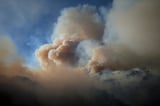
Phys.org • Feb 4, 2026
Study ties particle pollution from wildfire smoke to 24,100 US deaths per year