AI Model Prima Revolutionizes Brain MRI Diagnosis with 97.5% Accuracy, Eases Radiology Bottlenecks
February 6, 2026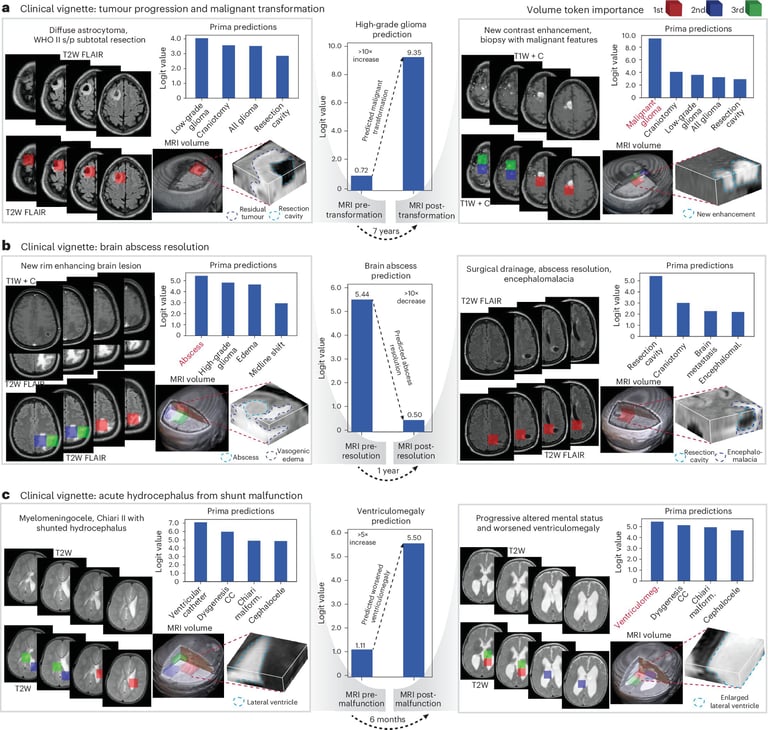


Prima is an AI model that can read a complete brain MRI and generate clinically meaningful diagnoses in seconds, trained on health system-scale data to improve speed and accuracy in neuroradiology care.
The model was trained on over 220,000 MRI studies, representing 5.6 million imaging sequences, with clinical histories and imaging indications from decades of care at University of Michigan Health.
In testing over a year, Prima analyzed more than 30,000 MRI studies across more than 50 radiologic diagnoses, achieving up to 97.5% diagnostic accuracy and prioritization of urgent cases.
The research is early-stage; further evaluation and careful integration into clinical practice are planned, with attention to how AI tools should be incorporated by health systems and policymakers.
The study emphasizes real-world deployment potential, algorithmic fairness across demographic groups, and the goal of aligning AI tools with clinical reasoning to improve timely, data-rich interpretations in precision medicine.
The study highlights potential benefits for health systems facing rising MRI demand and radiology workforce shortages, with implications for faster, improved patient care and workflow efficiency.
The technology is positioned as a potential solution to rising MRI demand and radiology workforce shortages, with applicability across health systems in the United States.
Funding sources include the NIH’s NINDS, Chan Zuckerberg Initiative, and several university-affiliated foundations; publication appears in Nature Biomedical Engineering under the paper titled “Learning neuroimaging models from health system-scale data.”
The technology is framed as a co-pilot for radiologists rather than a replacement, intended to augment workflow, reduce bottlenecks, and extend access to neuroradiology expertise across diverse settings including rural and resource-limited hospitals.
Future work includes integrating more detailed electronic medical record data to further improve diagnostic accuracy and exploring application to other imaging modalities, with broader potential as a general imaging co-pilot and decision-support tool.
The work is at an early evaluation stage; future work includes incorporating more detailed patient information and electronic medical record data to further improve accuracy and alignment with radiologist practice.
Future plans include integrating richer electronic medical record data and expanding to other imaging modalities such as mammography, chest X-rays, and ultrasound, using the foundation-model approach to support broader diagnostic workflows.
Summary based on 4 sources
Get a daily email with more AI stories
Sources

EurekAlert! • Feb 6, 2026
AI model can read and diagnose a brain MRI in seconds
Medical Xpress • Feb 6, 2026
AI model reads brain MRIs in seconds, hitting up to 97.5% accuracy
Michigan Medicine • Feb 6, 2026
An AI model that can read and diagnose a brain MRI in seconds
Inside Precision Medicine • Feb 6, 2026
AI That Reads Brain MRIs in Seconds Could Transform Neurologic Care