Breakthrough Study Maps Maternal-Fetal Interface, Links Cannabis Use to Pregnancy Risks
April 8, 2026

Researchers have produced the most detailed map to date of the maternal–fetal interface, analyzing around 200,000 cells directly and nearly 1,000,000 in their anatomical context to identify cell types and states linked to pregnancy complications.
By integrating this single-cell and spatial data with large genetic studies, the team pinpointed which placental and uterine cells express high-risk genes and are most vulnerable in conditions like preeclampsia, preterm birth, and miscarriage.
Using genetic data from more than 10,000 patients, they mapped genetic risk signals for adverse pregnancy outcomes onto DNA regulatory regions to identify the exact cell types and states involved.
Publication details: the study appears in Nature in 2026, with Li and colleagues as primary authors; the paper was published and widely disseminated on April 8, 2026.
The placenta is a temporary organ that connects the fetus to the mother and taps into the maternal blood supply to support growth.
The findings may help explain associations between cannabis use during pregnancy and risks like reduced placental blood flow and fetal oxygen delivery, though cannabinoids are not the sole cause of these outcomes.
Historical and foundational obstetric literature is referenced to contextualize the study within placental biology.
Project leaders emphasize that the level of detail achieved is unprecedented and could significantly deepen understanding of both normal development and pathology at the maternal–fetal interface.
The article summarizes Wang, C. et al.’s study, Single-cell spatiotemporal dissection of the human maternal–fetal interface, published in Nature in 2026.
Beyond basic science, the work showcases the promise of single-cell multi-omics and spatial data to advance precision medicine in reproductive biology and informs public health discussions about cannabis use in pregnancy.
A newly identified maternal cell type at the entry point of fetal placental cells bears cannabinoid receptors and acts as a regulator, potentially limiting placental invasion when exposed to cannabinoids.
This novel cell type appears to function as a 'speed bump' at the maternal–fetal interface, modulating invasion depth to prevent over- or under-invasion by fetal cells.
Summary based on 5 sources
Get a daily email with more Science stories
Sources

Neuroscience News • Apr 8, 2026
Pinpointing the Specific Cells That Trigger Pregnancy Risks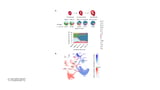
Nature • Apr 8, 2026
Mapping the maternal–fetal interface through pregnancy in high resolution
BIOENGINEER.ORG • Apr 8, 2026
Cell-by-Cell Analysis Reveals Insights into Pregnancy Risks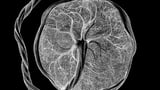
Live Science • Apr 8, 2026
'No one knows what they are': Researchers discover new type of cell that's seen only during pregnancy