Oldest 'Octopus' Fossil Reclassified as Nautiloid, Shifting Evolution Timeline
April 8, 2026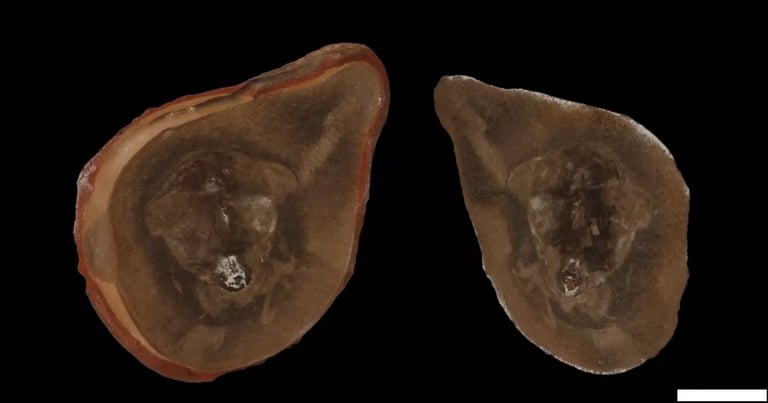


If Pohlsepia is a nautilus, it pushes the origin of octopuses to a more recent time and softens the implied rapid early cephalopod diversification.
A fossil long identified as the oldest octopus, Pohlsepia mazonensis, has been reclassified as a nautiloid rather than an octopus.
The discovery aligns Pohlsepia with Paleocadmus pohli from the same site, suggesting shell degradation before fossilization.
The study appears in Proceedings of the Royal Society B.
Overall impact includes refining cephalopod evolution timelines and highlighting preservation biases due to decay.
This reclassification alters the perceived timeline of octopus evolution by challenging the status of the oldest-known octopus fossil.
Researchers used high-powered X-ray techniques to examine preserved minerals around soft tissues, uncovering a radula as key evidence for nautiloid identity.
Analyses conducted with the SOLEIL synchrotron in Saclay, France, contributed to the revised identification.
The research underscores how fossil classification can change with new evidence and advanced technology, suggesting future discoveries may bring further clarity.
The fossil is housed at the Field Museum of Natural History in Chicago.
Synchrotron imaging revealed tiny tooth-like structures (radula) within the rock, supporting nautiloid identity over octopod features.
The study, published in early April 2026, demonstrates how modern imaging can redefine long-standing fossil interpretations.
Summary based on 3 sources
Get a daily email with more Science stories
Sources

ScienceDaily • Apr 7, 2026
The world’s “oldest octopus” was never an octopus
Science News • Apr 7, 2026
The ‘oldest fossil octopus’ is probably another animal