Study Reveals High Gray Whale Mortality in San Francisco Bay Due to Vessel Strikes
April 13, 2026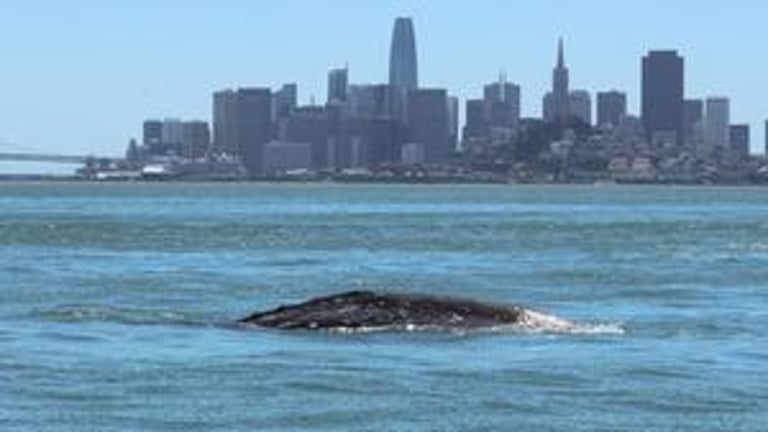

A new study in Frontiers in Marine Science finds that roughly 18% of gray whales observed entering San Francisco Bay later die there, with vessel strikes identified as a major cause.
From 2018 through 2025, 70 gray whales were found dead in the area, including 30 from boat strikes and many others from malnutrition, with 21 of 45 identifiable deaths linked to Bay visitors.
It emphasizes protecting feeding and stopping areas for gray whales, especially in busy waterways like San Francisco Bay, as climate-driven shifts alter migration and feeding.
The study notes limitations, including incomplete daily movement data for individuals and potential overlap between identifications and unidentified necropsied whales.
Only four of the 114 identified visiting whales were seen in multiple years, suggesting many do not return to the Bay and raising questions about health, foraging stress, and movement under climate change.
This fits a multispecies migration pattern where gray whales travel Arctic to Mexico annually; since 2018, some have begun stopping in the Bay for food, aligning with reduced Arctic foraging and a historic late-2010s die-off.
Experts note the high apparent mortality rate for whales entering the Bay, and view this as potentially reflecting broader shifts in feeding behavior and migration.
Researchers from the Marine Mammal Center and California Academy of Sciences analyzed 2018–2025 data using opportunistic surveys, citizen science photos, and systematic surveys from 2023–2025, linked to necropsy records.
Since 2018, gray whales have increasingly entered San Francisco Bay, possibly as an emergency foraging site or stopover for hungry individuals.
Among identifiable deaths, at least 18% were seen in the Bay before dying there, and over 40% of local strandings were due to vessel-related trauma, signaling vessel traffic as a key threat in the Bay.
The findings may reflect a broader trend of gray whales exploring unusual feeding areas in Florida, New England, and Hawaii, which could either bolster resilience or raise risk depending on conservation efforts.
The study underscores an urgent need to understand Bay-use patterns and to mitigate human-caused mortality as climate change reshapes prey availability and migration.
Summary based on 2 sources
Get a daily email with more Science stories
Sources
EurekAlert! • Apr 13, 2026
18% of gray whales that enter San Francisco Bay die there, scientists find
Science News • Apr 13, 2026
For gray whales, San Francisco Bay is becoming a deadly pit stop