New Hodgkin Lymphoma Therapy Shows High Success, Reduces Need for Radiation
April 20, 2026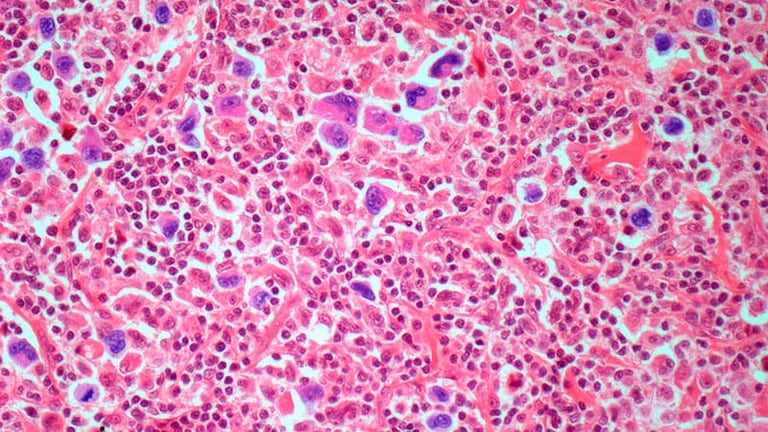

The safety profile showed that nearly all patients experienced some treatment-emergent adverse events, with 44% having grade 3 or higher events; peripheral sensory neuropathy was common but mostly low-grade and resolving, and immune-mediated events occurred in 22% (including thyroid dysfunction and rash), with no febrile neutropenia reported.
Two-year progression-free survival was exceptionally high—about 97% in favorable disease and 97–98% across PET response groups (Deauville scores 1–3)—indicating robust short-term disease control.
Most patients did not require consolidative involved-site radiation therapy, suggesting potential toxicity reduction compared with standard treatment approaches.
Source: Blood, led by Jeremy S. Abramson at Massachusetts General Hospital, with disclosures noting sponsorship from Seagen, Takeda, and Bristol Myers Squibb and various author affiliations.
Study limitations include unrecorded steroid doses, potential unreliability of interim PET as a biomarker in nivolumab-containing chemo, focus on nonbulky early-stage disease limiting generalizability, and relatively short follow-up for long-term outcomes and late toxicities.
AN+AD therapy—combining brentuximab vedotin with nivolumab plus doxorubicin and dacarbazine—achieved high complete responses and strong short-term disease control in nonbulky, early-stage classical Hodgkin lymphoma, based on a phase 2 trial of 154 treatment-naive patients.
End-of-treatment outcomes were strong: 92% complete response, 96% objective response, and 96% maintaining complete response at 2 years, with similar results across favorable and unfavorable subgroups.
Overall, AN+AD shows excellent efficacy and safety in nonbulky early-stage cHL and may allow omission of consolidative radiation, potentially reducing toxicity while preserving disease control.
Summary based on 1 source
Get a daily email with more Science stories
Source
Medscape • Apr 20, 2026
Immunotherapy Combo Shows Promise for Hodgkin Lymphoma