Largest Global Alzheimer's Genetic Study Uncovers 127 Risk Regions, Reveals New Drug Targets
October 28, 2026

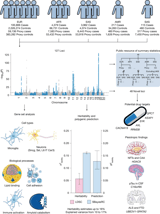
A large multi-ancestry GWAS of Alzheimer’s disease analyzed nearly 1.8 million individuals, including over 183,000 cases, identifying 118 significant loci in the multi-ancestry analysis and 9 additional ancestry-specific loci, 48 of which are new.
Led by the University of Exeter’s PROTECT project and published in Nature, the study maps 127 DNA regions linked to Alzheimer’s risk, with 48 regions newly identified in this context.
This effort represents the largest Alzheimer’s genetic analysis to date, leveraging data from about 2.8 million individuals and highlighting the genetic architecture of the disease across populations.
Findings underscore the role of brain immune cells called microglia and pinpoint several neuronal cell types enriched for genetic signals, suggesting new directions for biology and therapy.
Cross-analysis links specific genes to astrocytic or oligodendrocytic expression changes, with colocalization and Mendelian randomization implicating cell-type–gene relationships in AD risk (e.g., increased astrocytic KIF21B; decreased oligodendrocytic MAF).
Effector gene prioritization for 127 loci used a multi-pronged approach (ExWAS, FLAMES, colocalization, MR, prior GWAS), highlighting candidate genes and potential drug targets.
Pathway analysis identified 13 gene-set clusters related to lipid binding, immune activation, amyloid catabolism, and cell adhesion, plus five additional processes including EphrinB signaling and synapse endocytosis.
Researchers caution that identified associations are starting points for causal investigations and that safe, effective interventions require follow-up studies.
SNP-based heritability is estimated around 16%, with improved out-of-sample polygenic score predictive power and enrichment of associations in microglia and neuronal cell types.
Sex-stratified analyses reveal some sex-specific loci and a larger APOE-ε4 effect in females (OR around 2.85) than males (OR around 2.52) within European ancestry, with high genetic correlation between sexes.
The work showcases global collaboration among academia, biobanks, and industry within the Psychiatric Genomics Consortium, pooling data from 30 groups to detect subtle signals.
Among new loci, 17 genes interact with non-AD-approved drugs; several have shown promise in animal models, while others like CACNA1S and AXL did not improve AD symptoms in humans or mice.
Summary based on 2 sources
Get a daily email with more Science stories
Sources
Nature • Oct 28, 2026
Alzheimer’s disease genetics converges on microglial and neuronal dysregulation
Medical Xpress • Oct 28, 2026
Large-scale genetic study on Alzheimer's identifies new DNA risks