UK Trial to Test AI Breast Cancer Detection in 700,000 Women
November 23, 2026


A three-year UK trial called Edith will test whether AI can help specialists detect breast cancer earlier by analysing screening mammograms from around 700,000 women at 30 sites.
Women attending routine screening at the sites will be included unless they opt out, but every mammogram will still be reviewed by at least one human radiologist and appointments will remain unchanged.
Four AI companies are involved, and researchers will assess whether the technology is safe and effective before considering any change to current screening practice.
The study is funded by the National Institute for Health and Care Research and the UK government, which is providing £10 million, and is led by the University of Warwick, the University of Cambridge and Cambridge University Hospitals NHS Foundation Trust in partnership with NHS England.
Researchers will weigh potential benefits, including finding more cancers, against risks such as healthy tissue being wrongly flagged, leading to extra tests and anxiety.
Women recalled for further tests may also face a very small additional radiation exposure.
Mammograms will be processed in a secure cloud environment operated by CIMAR (UK) Ltd, which will delete the information within 30 days; study data will be kept for 20 years after the trial, and external AI developers can check their software in the UK-based secure environment without taking or reusing the data.
The trial builds on a January study in The Lancet that analysed nearly 106,000 mammograms in Sweden and found AI could improve cancer detection while reducing radiologists’ workloads.
Professor Fiona Gilbert of the University of Cambridge said automated analysis could speed up mammogram reviews and give radiologists more time to focus on patients diagnosed with cancer.
Yvette Cooper visited Addenbrooke’s Hospital for the trial’s launch and said the study could accelerate diagnosis, while stressing the need for safeguards; Kanishka Narayan said it would test whether AI could work alongside radiologists to improve detection.
Results will be published after several years and shared with government and screening services, while the NHS says it will change practice only if evidence shows AI is as safe and effective as current care.
Shirley Essex, 70, from Cambridgeshire, said a routine mammogram found her symptom-free, early-stage cancer in October 2025 and saved her life; after surgery and radiotherapy she is doing well, and she is not taking part in the trial.
Summary based on 19 sources
Get a daily email with more AI stories
Sources
BBC News • Nov 23, 2026
Can AI spot breast cancer earlier? NHS launches world's largest trial to find out
BBC News • Nov 23, 2026
Can AI spot breast cancer earlier? NHS launches world's largest trial to find out
The Independent • Nov 22, 2026
700,000 women invited to take part in major AI breast screening trial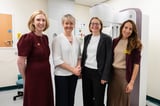
University of Cambridge • Nov 23, 2026
Cambridge co-leading world’s largest trial to use AI to help detect breast cancers earlier