Gaza’s Ceasefire Leaves Palestinians in Limbo as Outside Control Has No Clear End Date
November 14, 2026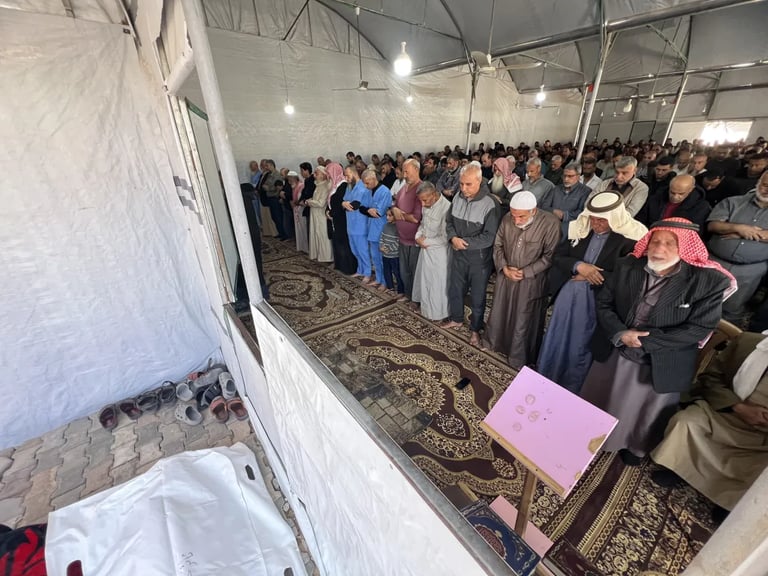

Gaza’s ceasefire has left Palestinians in a limbo between war and peace: Israeli military control and attacks continue, while displaced families still do not know when they can return or rebuild.
The devastation is immense: by October 21, 2026, Gaza’s Health Ministry reported 74,494 Palestinians killed and 175,604 injured, and by the ceasefire’s first anniversary nearly two-thirds of housing units had been destroyed, with large-scale reconstruction yet to begin.
The delay also carries immediate humanitarian risks, with a U.N. report identifying 217 displacement sites at medium to high flood risk that house about 235,000 people, as well as nearly 44,000 people sheltering in unsafe buildings; restrictions on land access and supplies have hampered winter preparations.
The arrangement endorsed by Security Council Resolution 2803, adopted in November 2025, puts Gaza’s administration and redevelopment under a Board of Peace chaired by Donald Trump; Palestinian Authority control is contingent on reforms and governing capacity, while Israeli withdrawal depends on demilitarization milestones and security assessments.
The author warns that this transition gives outside actors substantial authority while making the restoration of Palestinian political authority conditional and leaving its timeline unclear.
Although the resolution authorizes the international arrangements until December 31, 2027, subject to further Security Council action, it sets no deadline for full Israeli withdrawal or the transfer of political authority to Palestinians.
The withdrawal milestones, how compliance will be judged and how disputes will be resolved remain unclear, allowing Israel and the institutions overseeing the transition to prolong outside supervision, the author argues.
To prevent security concerns from indefinitely delaying self-government, the author calls for clear, achievable benchmarks and an independent arbiter, so Hamas disarmament or isolated attacks cannot become open-ended grounds for postponing Palestinian authority.
The Palestinian Authority’s ability to provide services is weakened by Israel’s withholding of about $6 billion in tax revenues collected on its behalf, creating what the author calls a circular test: diminished capacity can then be cited to justify continued outside supervision.
The author argues that technocratic service delivery cannot replace political representation based on Palestinian consent, and that an administration primarily accountable to a foreign board lacks that democratic mandate.
The United States has a central role in implementing the agreement and provides military assistance to Israel; without credible consequences for obstructing withdrawal, incentives to retain control may outweigh pressure to comply, while humanitarian aid could keep civilians alive without changing who controls access and political decisions.
The analysis places these concerns in a longer history of displacement and outside control, from the 1948 Nakba and Israel’s 1967 occupation to the Oslo process, whose interim Palestinian self-government arrangement was meant to last no more than five years but remains unresolved decades later.
Summary based on 1 source
Get a daily email with more World News stories
Source
The Intercept • Nov 14, 2026
The Ceaseless Ceasefire