Qatar LNG Shipments Rebound as Gulf War Insurance Costs Soar
November 26, 2026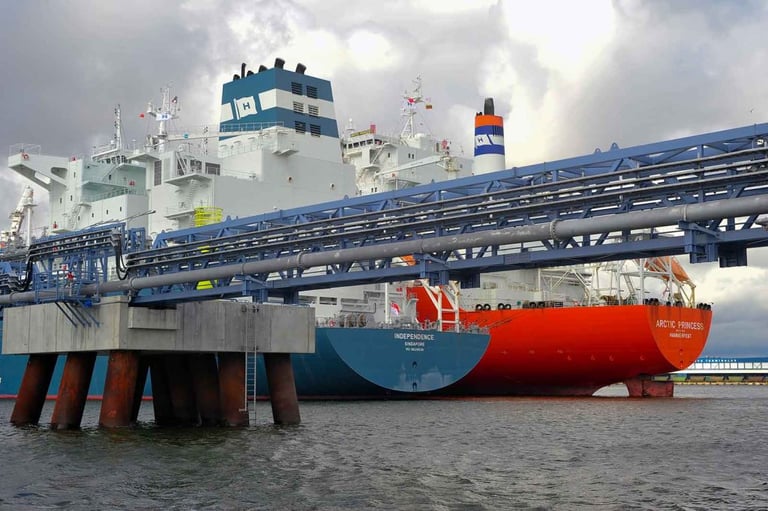

Qatar’s LNG shipments from Ras Laffan picked up in November, reaching 36 vessel berthings—the highest monthly total since the US-Iran conflict began at the end of February, and up from 35 in October and 21 in September.
That worked out to about 1.4 shipments a day, roughly 25% above October, but exports remained around half of their prewar pace.
LNG crossings through the Strait of Hormuz fell after attacks earlier in November but have since begun to recover, according to vessel-tracking data and satellite imagery cited by Bloomberg.
Bloomberg’s analysis found that Qatar is using at least 34 LNG tankers to move cargo through the strait, where vessels often switch off tracking signals, making shipments harder to monitor.
Twenty-nine of November’s vessels were not transmitting Automatic Identification System signals, compared with seven in September and 27 in October.
Satellite imagery from Nov. 21 showed heat signatures at nine of Ras Laffan’s 14 production units—the highest number since the war began—though the images did not reveal how much LNG the units were producing.
Ras Laffan has operated at reduced capacity since attacks damaged the facility in March, and the tankers serving it average 18 years old, compared with 10 years for the global LNG fleet.
Qatari cargoes are heading to Europe and Asia as the regions enter peak winter heating season, with natural gas prices about twice their prewar levels amid colder weather and ongoing Persian Gulf disruptions.
The shipping rebound is unfolding alongside sharply higher costs: war-risk insurance for vessels entering the Gulf has climbed from about 0.25% of a ship’s value at the start of the year to as much as 5% or more, according to Ikram Elloumi of Wood Mackenzie.
For a modern LNG tanker worth roughly $250 million, that insurance can add $2.5 million to $12.5 million to a Gulf voyage; older, less valuable vessels face smaller increases.
Who ultimately absorbs the extra cost depends on market conditions and bargaining power: buyers may pay more when supplies are tight, while producers may earn less in more balanced markets.
Elloumi said war-risk premiums are becoming a decisive part of LNG trade economics, not merely an insurance expense; before the war, Qatar supplied roughly one-fifth of global LNG exports, and Ras Laffan was the world’s largest LNG facility.
Summary based on 3 sources
Get a daily email with more World News stories
Sources
Insurance Journal • Nov 25, 2026
Qatar LNG Exports Hit Busiest Month Since Start of Iran War, Despite Insurance Costs
Middle East Monitor • Nov 26, 2026
Qatar’s LNG shipments reach highest pace since start of US-Iran war: Report
oEnergetice.cz • Nov 26, 2026
Qatar sharply increased LNG exports in November, adding a quarter