Chinese Rover Discovers Ancient Mars Beach, Suggesting Past Oceans and Potential Habitability
February 25, 2025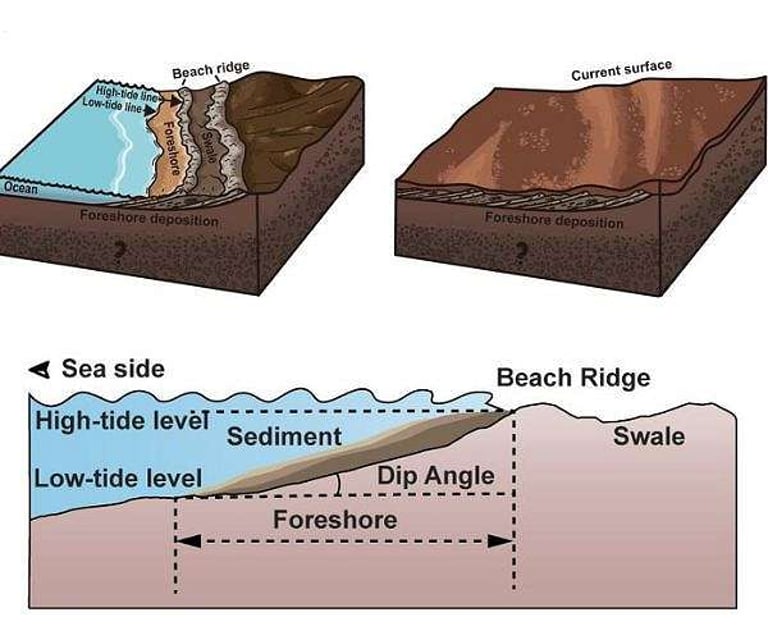


Planetary scientist Aaron Cavosie highlighted the significance of these findings in understanding the history of water on Mars, noting evidence of surface water during the Noachian period.
Recent studies indicate that ancient Mars was both cold and wet, contradicting previous theories that suggested it was either dry or warm.
Overall, this research provides significant insights into the planet's wet history and its potential for past life, although definitive proof remains elusive.
Hai Liu from Guangzhou University pointed out that Zhurong's ground radar made these discoveries possible, revealing untouched coastal deposits despite billions of years of erosion.
This discovery enhances the case for Mars' past habitability, as radar data analysis indicated 'foreshore deposits' that resemble coastal environments on Earth.
The buried shoreline deposits measured by Zhurong represent a pristine dataset that offers insights into Mars's hydrological history, which lasted tens of millions of years before drying out.
The presence of these shoreline features implies that significant amounts of water may still exist in frozen form beneath the Martian surface, awaiting future exploration.
The study's co-author noted the presence of classic beach features, with evidence of sediment transport from ancient rivers to the ocean.
The research indicates that the Martian coastline has evolved over time, challenging the perception of Mars as a static planet and highlighting its geological evolution.
A research team has unveiled groundbreaking findings about Mars, revealing that the Chinese Zhurong Mars rover discovered evidence of an ancient beach, suggesting the planet may have once harbored oceans.
Researchers ruled out alternative explanations for these formations, such as wind, rivers, or volcanic activity, concluding they originated from a coastal environment.
Michael Manga, a co-author of the study, emphasized that the structures do not resemble sand dunes or impact craters, further supporting the ocean theory.
Summary based on 22 sources
Get a daily email with more World News stories
Sources

Time • Feb 25, 2025
Beaches on Mars Once Rivaled Those on Earth
Axios • Feb 25, 2025
Mars once featured an ocean with "vacation-style" beaches, study suggests
ScienceDaily • Feb 24, 2025
Gulf of Mars: Rover finds evidence of 'vacation-style' beaches on Mars