Study Links Autism and Muscular Disorder: New Genetic Insight Offers Hope for Targeted Therapies
April 21, 2025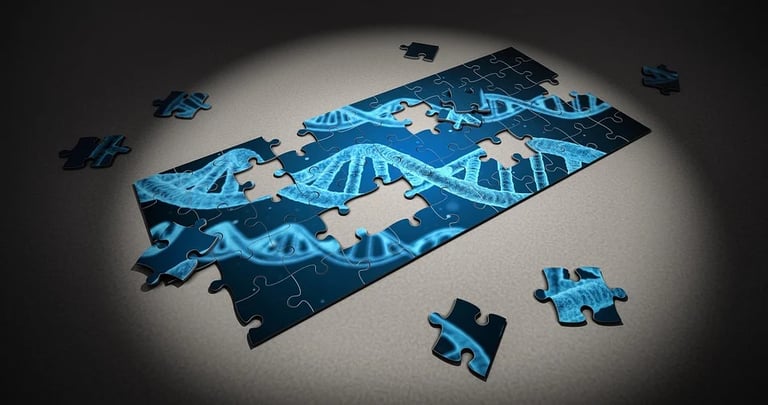

Recent data from the CDC shows a dramatic increase in autism rates in the U.S., with 1 in 31 children affected, raising questions about the underlying causes of this rise.
The resulting protein imbalance disrupts gene splicing for multiple genes involved in brain function, which may explain the social and behavioral challenges seen in DM1 patients with ASD.
Building on previous research, Dr. Christopher Pearson at SickKids identified a molecule that can contract TREs in Huntington's disease, suggesting potential applications for treating similar conditions like DM1 and ASD.
DM1 is a genetic disorder characterized by progressive muscle weakness and cognitive issues, stemming from a faulty gene that fails to function properly.
Researchers are exploring whether the mis-splicing observed in DM1 also occurs in other genes linked to ASD, aiming to develop therapies that could correct these genetic issues.
In related research, a non-invasive brain stimulation treatment called transcranial pulsed current stimulation (tPCS) has shown promise in improving certain autism symptoms in children aged 3 to 14.
A recent study published in Nature Neuroscience reveals a genetic connection between autism spectrum disorder (ASD) and myotonic dystrophy type 1 (DM1), focusing on tandem repeat expansions (TREs) in the DMPK gene as a shared mechanism affecting gene splicing.
This research indicates that altered RNA from TREs binds to a protein crucial for gene splicing regulation, leading to a depletion of this protein that is essential for proper brain development.
Dr. Ryan Yuen, a senior scientist at SickKids and a study author, emphasized that these findings could pave the way for new diagnostic methods and precision therapies targeting the molecular pathways involved in autism.
This discovery provides significant insights into the biological origins of autism, suggesting that it may have specific genetic causes rather than being solely a spectrum disorder.
The study was supported by various organizations, including the Azrieli Foundation and the National Institutes of Health, underscoring its importance in genetic research.
The findings highlight the need for targeted support and potential treatments focusing on gene repair for patients affected by both DM1 and autism.
Summary based on 6 sources
Get a daily email with more Science stories
Sources

Daily Mail • Apr 21, 2025
Doctors discover new cause of autism: 'Fourteen times more likely'
Medical Xpress • Apr 21, 2025
Study reveals new genetic mechanism behind autism development
News-Medical • Apr 21, 2025
Researchers uncover genetic link between autism spectrum disorder and myotonic dystrophy type 1
Neuroscience News • Apr 21, 2025
Tandem Repeats May Explain Autism Risk