Baker's Yeast Unveils Human Migration Patterns: A Historical Microbial Journey
April 23, 2025

Bensasson raised concerns about the extent to which human activities may unintentionally alter microbial ecosystems, warning of the unknown consequences of such changes.
Overall, the research highlights the significant impact of human activity on yeast populations and raises awareness of the potential environmental consequences of these interactions.
Peña described the interaction between wild and domestic yeasts as a 'unique duality' influenced by human actions.
Bensasson emphasized the need for further exploration of yeast populations in America and Europe, building on previous findings about their differences.
By analyzing yeast DNA from various regions in America and Europe, researchers discovered unexpected genetic similarities that suggest a history of microbial hitchhiking alongside human populations.
New research from the University of Georgia reveals that baker's yeast can trace human migration patterns, indicating a historical connection between yeast and human ancestors who domesticated it around 7000 BCE.
The study, led by Ph.D. candidate Jacqueline Peña and professor Douda Bensasson, highlights the complex interactions between wild and domestic yeast populations.
The team utilized tree bark samples to stimulate yeast growth, revealing that the separation between yeast groups occurred during the last Ice Age.
Published in the journal Molecular Ecology on April 24, 2025, the study emphasizes the significant role of even the smallest organisms in narrating broader stories about human history and development.
The findings suggest that wild yeast populations are not completely isolated from human activity, indicating ongoing interactions over time.
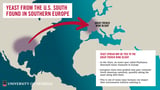
Interestingly, yeast from southern European winemaking regions was found to resemble strains from the southern U.S., likely due to the introduction of North American vines following the Great French Wine Blight in the 1850s.
This exchange of yeast strains underscores the interconnectedness of humans and yeast in shaping environmental changes throughout history.
Summary based on 8 sources
Get a daily email with more Science stories
Sources
Phys.org • Apr 23, 2025
Yeast DNA reveals ties to human migration and the last ice age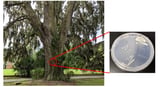
Newswise • Apr 23, 2025
Spread of baker’s yeast tied to human migration | Newswise
New Food Magazine • Apr 23, 2025
Clear link discovered between baker’s yeast evolution and early human migration
The Red & Black • Apr 24, 2025
New UGA study links yeast to human migration patterns