New MiCO Map Revolutionizes Marine Conservation with Global Migratory Insights
May 8, 2025

The MiCO map has already influenced policy discussions and is expected to be integrated into the Convention on Migratory Species' Atlas of Animal Migration by March 2026.
The ultimate goal of this research is to establish a comprehensive global baseline of connectivity data among marine migratory species to inform data-driven conservation strategies.
The findings from this research align with the Kunming-Montreal Global Biodiversity Framework, which aims to conserve 30% of marine areas by 2030, particularly in high seas where protections are being considered.
Dr. Lily Bentley emphasized that MiCO is the first freely accessible global tool showcasing marine migratory connectivity, significantly aiding conservation efforts.
The project has garnered recognition from multiple United Nations organizations and aims to formalize its role in future conservation frameworks, thereby enhancing international cooperation for the protection of migratory marine species.
Future updates to the MiCO map are planned as more data becomes available, which will enhance its utility for conservation managers and policymakers.
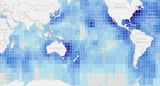
An international collaboration between the University of Queensland and Duke University has resulted in the creation of an interactive map called MiCO (Migratory Connectivity in the Ocean), which illustrates the migratory connections of over 100 marine species.
This innovative database encompasses 109 species, including birds, mammals, turtles, and fish, compiling thousands of records from more than 1,300 sources.
Despite the extensive data collected, gaps remain in tracking certain species globally, prompting ongoing research to fill these gaps and update the map with new information.
Associate Professor Daniel Dunn noted that the connectivity illustrated by MiCO underscores the need for globally-aligned conservation efforts, such as the recent High Seas Treaty aimed at preserving biodiversity beyond national waters.
Dr. Bentley highlighted that effective protection of migratory species requires collaborative efforts among nations, as many marine animals traverse national waters and the high seas, exposing them to threats across different jurisdictions.
The interactive map can be accessed at [https://mico.eco/], providing users with the ability to explore specific species and their migratory connections.
Summary based on 9 sources
Get a daily email with more Science stories
Sources

ScienceDaily • May 8, 2025
Database reveals vital ocean links to aid conservation
EurekAlert! • May 8, 2025
Database reveals vital ocean links to aid conservation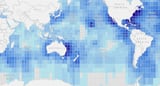
UQ News • May 9, 2025
Database reveals vital ocean links to aid conservation