AI-Powered Gut Bacteria Test Offers Promising Noninvasive Colorectal Cancer Screening
June 3, 2025


Colorectal cancer (CRC) is the third most common and second deadliest cancer worldwide, with only 40% of cases diagnosed before metastasis, leading to poor survival rates.
The rising incidence of colorectal cancer in individuals under 50 has prompted researchers to seek early detection strategies.
An international study published in Nature Medicine, coordinated by the University of Trento, has identified a 'microbial signature' associated with colorectal cancer.
This research team has developed a method that combines artificial intelligence and microbiome analysis to detect colorectal cancer through gut bacteria found in stool tests.
The focus is on noninvasive screening to identify diseases early, with future clinical trials needed to validate the effectiveness of this metagenomic test.
The findings highlight the promising integration of microbiome science and machine learning for clinical applications in cancer detection.
Machine learning models were employed to predict CRC status from stool metagenomics, achieving high accuracy, suggesting the microbiome's utility in noninvasive screening tools.
Researchers are exploring the gut microbiome as a clinical target for colorectal cancer screening, potentially replacing invasive colonoscopies with simple stool tests.
The accuracy of the microbial signature approach for screening is close to 90%, correlating with the clinical stage of the disease.
This microbial signature includes bacteria such as Fusobacterium nucleatum, which are more abundant in the intestines of colorectal cancer patients.
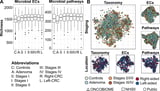
The study revealed that microbiome changes are stage-specific, with certain species correlating with later stages of CRC, suggesting a continuum of microbial shifts throughout cancer progression.
Despite these advancements, many questions remain regarding the microbiome's causal role in cancer and the underlying mechanisms involved.
Summary based on 3 sources
Get a daily email with more AI stories
Sources

Medical Xpress • Jun 3, 2025
Team uses AI and microbiome analysis to accurately colorectal cancer through gut bacteria