New Study Reveals Dynamic Geological History of Grand Canyon's Tonto Group
June 8, 2025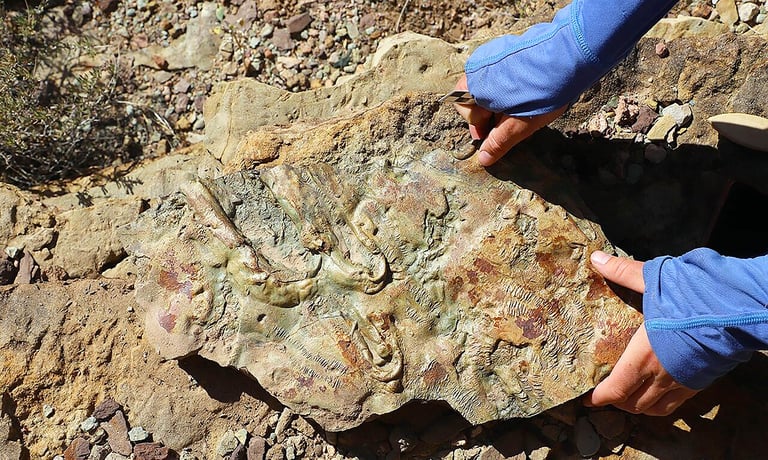

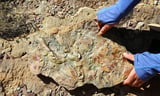
A recent groundbreaking study published on June 7, 2025, has challenged longstanding beliefs about the Tonto Group rocks in the Grand Canyon, revealing new insights into Earth's geological history.
The research highlights dramatic shifts in fossil assemblages within the Tonto Group, with distinct trilobite communities indicating rapid evolutionary changes across sedimentary layers.
Researchers found evidence of multiple shoreline advances during the Cambrian period, rather than a single rise in sea level, suggesting a more dynamic geological history.
Previously thought to represent a uniform rise in sea level, the Tonto Group is now understood to have formed through episodic surges of seawater and rapidly changing environments.
These sedimentary layers provide valuable information about ancient oceans and ecosystems, which have long since disappeared.
Karl Karlstrom from the University of New Mexico emphasizes that the new model reveals a mix of marine and non-marine environments, along with faster evolutionary changes than previously believed.
James Hagadorn from the Denver Museum of Nature & Science notes that this research enhances our understanding of the Cambrian Explosion and influences global interpretations of rock records.
Using Uranium-Lead dating on zircon crystals, researchers correlated rock layers and determined that significant faunal changes occurred in less than 800,000 years, a much shorter timespan than previously thought.
The study underscores the importance of understanding these geological processes in the context of modern climate challenges, as they provide insights into how past environments responded to changes.
This reinterpretation of the Tonto Group highlights the provisional nature of geological truths and the significance of integrating fossil records, sedimentology, and high-precision dating.
Key findings indicate that the Cambrian period was characterized by swift ecological shifts rather than a slow progression, altering our understanding of early life on Earth.
Published in GSA Today, the study showcases the value of modern scientific techniques in reinterpreting longstanding geological formations.
Summary based on 3 sources
Get a daily email with more Science stories
Sources
Earth.com • Jun 8, 2025
Grand Canyon rock discovery has rewritten geology textbooks
Indian Defence Review • Jun 7, 2025
Geologists Just Cracked Open a 500-Million-Year Mystery in the Grand Canyon — What They Found Is Rewriting