Chinese Breakthrough: New Ceramic Material Withstands 3,600°C, Revolutionizing Hypersonic Flight
June 16, 2025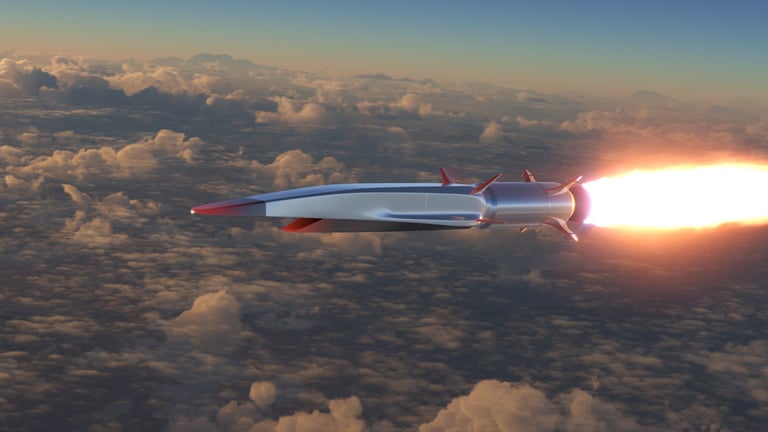

This new material not only exceeds the thermal limits faced in hypersonic flight but also has significant implications for industries such as aerospace and energy that require high-performance materials.
Carbon-carbon composites can withstand up to 3,000 degrees in inert environments but oxidize quickly at 370 degrees in air, significantly reducing their mechanical performance.
Professor Chu Yanhui from South China University of Technology stated that this achievement is the first of its kind globally, made possible through a high-entropy, multi-component design approach.
Chinese researchers have developed a groundbreaking carbide ceramic material capable of withstanding temperatures up to 3,600 degrees Celsius (6,512 degrees Fahrenheit), surpassing existing thermal limits for hypersonic flight.
Current materials used in hypersonic aircraft typically fail at temperatures below 3,000 degrees Celsius, underscoring the importance of this new advancement.
For context, SpaceX's Starship heat shield tiles can endure temperatures around 1,371 degrees Celsius, while metal alloys degrade above 2,000 degrees, highlighting the critical nature of this new material's capabilities.
The carbide ceramic is composed of hafnium, tantalum, zirconium, and tungsten, and exhibits a much lower oxidation rate at extreme temperatures compared to previously known materials.
The research findings were published in the journal Advanced Materials, indicating the scientific community's acknowledgment of this breakthrough.
Summary based on 2 sources
Get a daily email with more Science stories
Sources

South China Morning Post • Jun 15, 2025
China’s extreme heat shield breaks thermal limit on hypersonic flight
Yeni Şafak • Jun 15, 2025
Chinese researchers develop material that breaks thermal limit on hypersonic flight