'Dragon Man' Skull Confirms Denisovan Link, Sheds New Light on Human Evolution
June 18, 2025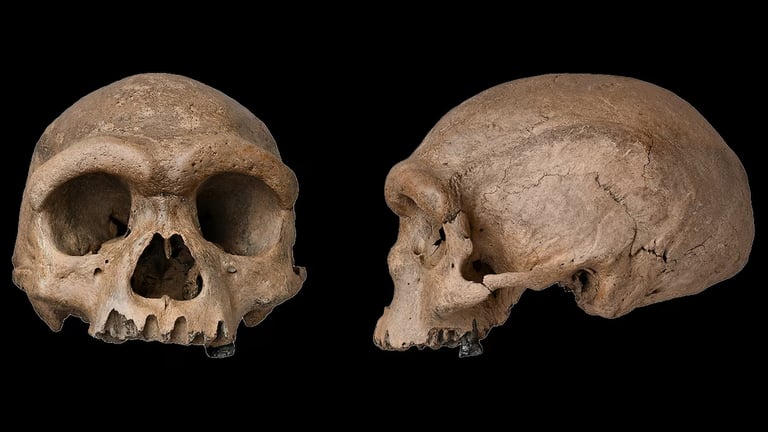

Recent DNA analysis and proteomic studies have confirmed that the ancient skull known as 'Dragon Man', discovered in Harbin, China, is a representative of the Denisovans, an ancient group of humans.
The skull exhibits a unique combination of traits that has ignited debate over whether it represents a distinct species or is simply classified as a Denisovan.
This discovery prompts a reevaluation of human evolution in Asia during the Middle Pleistocene, a critical period when multiple hominin species, including humans, Neanderthals, and Denisovans, coexisted and interbred.
The research enhances our understanding of the coexistence and interbreeding of Homo sapiens with Denisovans and Neanderthals, with significant implications for modern human genetics.
The findings allow for better comparisons of Denisovans to other hominin specimens, shedding light on their body proportions and adaptations to various climates.
This discovery supports the notion that Denisovans were large and robust, with estimates suggesting they had a lean body mass of around 100 kilograms.
The skull's distinctive features, including a wide, flattish face, large eye sockets, and robust molars, provide a glimpse into the physical appearance of Denisovans.
Researchers have found various Denisovan fossils across Asia, confirming their widespread presence and enhancing our understanding of their diversity.
Studies published recently indicate that mitochondrial DNA recovered from dental plaque links Dragon Man to an early Denisovan population that existed between 217,000 and 106,000 years ago.
While the findings support the classification of the skull as Denisovan, some scientists urge caution, emphasizing the need for more evidence to definitively classify it due to potential contamination concerns.
The ongoing debate highlights the complexity of human evolution and the necessity for further research to fully understand the Denisovans' role in our ancestry.
Lead researcher Qiaomei Fu stated that this discovery clears up some mysteries surrounding Denisovans and opens avenues for future investigations into East-Asian fossils.
Summary based on 9 sources
Get a daily email with more Science stories
Sources

Nature • Jun 18, 2025
First ever skull from ‘Denisovan’ reveals what ancient people looked like
Ars Technica • Jun 18, 2025
We’ve had a Denisovan skull since the 1930s—only nobody knew
AAAS logo • Jun 19, 2025
‘Dragon Man’ skull belongs to mysterious human relative