Revolutionary 'Leukemia-on-a-Chip' Device Accelerates Blood Cancer Treatment Testing
July 1, 2025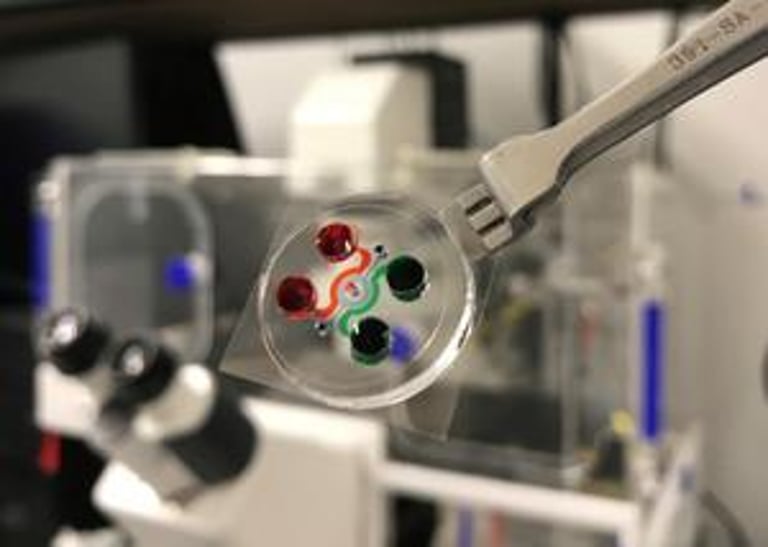

Researchers from NYU Tandon School of Engineering, led by Weiqiang Chen, have developed a groundbreaking device known as the 'leukemia-on-a-chip' for testing blood cancer treatments.
This innovative device, which is the size of a microscope slide, combines the physical structure of bone marrow with a functioning human immune system, potentially accelerating the development of immunotherapies.
The technology allows real-time observation of immunotherapy drug interactions with cancer cells in a controlled environment that closely mimics the human body, aligning with the FDA's encouragement of alternative testing methods.
Conventional testing methods have limitations, as animal models do not accurately mimic human immune responses and laboratory tests fail to replicate the complex interactions in the body.
The development comes at a critical time as the FDA plans to phase out animal testing for certain drugs, promoting alternative testing methods like the leukemia-on-a-chip.
Chimeric Antigen Receptor T-cell (CAR T-cell) therapy is a promising treatment for blood cancers, but nearly half of patients relapse and experience serious side effects; this new device aims to improve treatment outcomes.
The device can simulate clinical scenarios such as complete remission and treatment resistance, demonstrating the efficacy of newer 'fourth-generation' CAR T-cells over standard versions.
The researchers developed a matrix-based analytical index to evaluate different CAR T-cell therapies, aiming for more tailored treatment approaches for patients.
This innovative technology could allow personalized testing of cancer cells against various therapies to identify the most effective treatment options for individual patients.
Using advanced imaging, researchers observed immune cells actively hunting and killing cancer cells, revealing a purposeful movement pattern that was previously difficult to study in living systems.
CAR T-cell therapy, a significant advancement in treating blood cancers, involves genetically engineering a patient's immune cells but has a high relapse rate and serious side effects.
The leukemia chip recreates the essential regions of bone marrow where leukemia develops, allowing for self-organization and retention of the immune environment.
Summary based on 3 sources
Get a daily email with more Science stories
Sources
Medical Xpress • Jul 1, 2025
Engineers create first immunocompetent leukemia device for CAR T immunotherapy screening

Penn Today • Jul 1, 2025
First immunocompetent leukemia device for CAR T immunotherapy screening | Penn Today