Microplastics in Lungs: New Study Links Polystyrene to Cancer Risk
July 15, 2025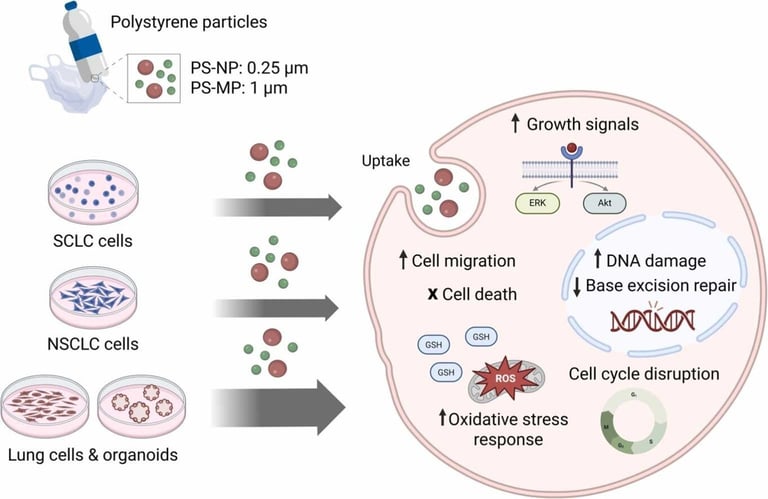

Additionally, healthy lung cells exhibited a diminished capacity to repair DNA damage after MNP exposure, raising concerns about long-term health effects.
While the long-term health impacts of MNP exposure remain uncertain, the study raises critical questions about the link between plastic pollution, chronic lung disease, and cancer, emphasizing the importance of further research.
The findings underscore the urgent need for interdisciplinary research to explore the long-term effects of MNP exposure on lung health, with calls for immediate action to reduce plastic waste.
Researchers at MedUni Vienna have discovered that microplastics and nanoplastics (MNPs), particularly polystyrene particles found in everyday items like food packaging, can induce malignant changes in lung cells, potentially contributing to cancer development.
The research found that healthy lung cells absorb smaller PS-MNP particles more than malignant cells, leading to increased cell migration, DNA damage, oxidative stress, and activation of pathways that promote cancer, while cancer cells showed resilience to the same exposure.
The research team, including Karin Schelch, Balazs Döme, and Büsra Ernhofer, focused on how different lung cell types respond to polystyrene micro- and nanoplastics, emphasizing the cellular stress responses.
The study observed that healthy cells activate their antioxidant defense systems in response to stress caused by polystyrene particles, indicating an attempt to mitigate damage and suggesting that the body's defenses are engaged when faced with plastic pollution.
Led by Karin Schelch and her team, the study focused on the effects of polystyrene micro- and nanoplastics (PS-MNPs) on various lung cell types, highlighting significant health risks associated with plastic pollution.
Summary based on 3 sources
Get a daily email with more Science stories
Sources
Medical Xpress • Jul 15, 2025
Microplastics can cause malignant changes in lung cells
News-Medical • Jul 15, 2025
Microplastics found to trigger cancer-linked changes in lung cells
Medical University of Vienna
Microplastics can cause malignant changes in lung cells | MedUni Vienna