Bio-Inspired Vascular Cement Revolutionizes Building Energy Efficiency with Elephant Ear Design
July 17, 2025

Researchers at Drexel University have developed a novel building material that incorporates a vascular network embedded in cement, inspired by the temperature regulation mechanisms of elephant and jackrabbit ears, to improve energy efficiency.
This innovative approach uses phase-change materials like paraffin, which absorb and release thermal energy during state changes, to effectively regulate surface temperatures of walls, floors, and ceilings.
The vascular network enhances thermal performance by increasing surface area, with studies showing that greater vascular surface correlates with slower temperature changes of about 1 to 1.25°C per hour, similar to natural animal cooling systems.
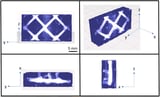
The team created various cement samples with different vascular channel patterns, discovering that a diamond-shaped grid structure offers the best balance of thermal regulation and structural strength.
Led by Amir Farnam, PhD, the research includes contributions from several scientists and demonstrates promising results that could significantly advance building energy efficiency.
Published in the Journal of Building Engineering, this research aims to reduce the nearly 40% of global energy consumption attributed to buildings, which also lose about 63% of their energy through surfaces.
The innovation addresses the challenge of heat loss, as about 50% of building energy is used for temperature maintenance, and the design can slow heating and cooling rates, improving overall energy efficiency.
Future research plans involve testing different phase-change materials and vascular channel configurations in larger samples to enhance durability, scalability, and real-world effectiveness.
The study confirms that increasing the vascular surface area improves thermal performance, mirroring the natural cooling mechanisms of animal ears, which inspired the design.
The research mimics the human circulatory system's temperature regulation, aiming to replicate natural processes within building materials for smarter climate control.
This bio-inspired material could lead to buildings that are more self-sufficient in temperature regulation, reducing reliance on external energy sources and lowering greenhouse gas emissions.
Overall, the materials can slow surface temperature changes to about 1 to 1.25°C per hour, providing a promising approach to creating stronger, smarter, and greener buildings.
Summary based on 5 sources
Get a daily email with more Science stories
Sources

Interesting Engineering • Jul 17, 2025
Elephant ear-inspired cement could help buildings stay cooler and save energy

TUN - The University Network • Jul 16, 2025
Researchers Innovate Energy-Efficient Building Materials Inspired by Elephant Ears - TUN