Ancient DNA Reveals West African Roots in 7th-Century England, Redefining 'Dark Age' Perceptions
August 13, 2025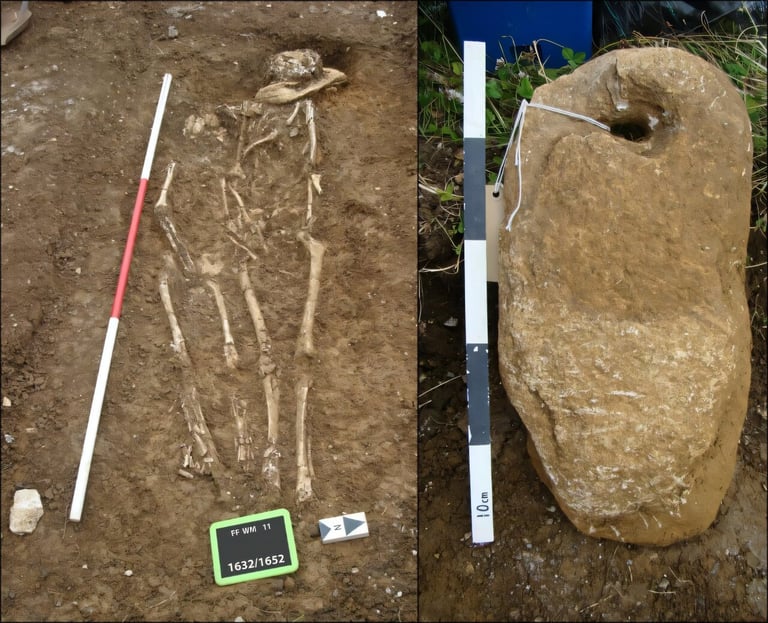


Recent archaeological findings reveal that two individuals buried in 7th-century cemeteries in England had ancestors from West Africa, highlighting a previously unrecognized diversity in early medieval England.
DNA analysis of remains from Updown in Kent and Worth Matravers in Dorset indicates that both individuals had genetic ties to present-day West African groups, including the Yoruba and Mende.
Duncan Sayer from the University of Lancashire emphasized that Kent served as a significant conduit for continental influence during the 6th century, suggesting that these findings are part of a broader royal network.
These discoveries challenge the perception of the Anglo-Saxon period as culturally isolated, indicating that migration and cultural interaction were more prevalent in Britain than previously acknowledged.
The evidence supports the idea that trade routes connected Britain to distant regions, including West Africa, through intricate networks involving merchants and travelers.
The findings imply that individuals from West Africa may have reached Britain via trade, potentially linked to the Byzantine Empire's reconquest of North Africa in the 6th century.
Both individuals were buried within their communities, suggesting they were integrated members of society, with no evidence indicating they were slaves.
Experts argue that the presence of West African ancestry in these individuals challenges the notion of 7th-century England as an isolated 'dark age' society, underscoring its dynamic nature and extensive trade connections.
This research, published in the journal Antiquity, marks a significant advancement in understanding early English population diversity through genetic analysis.
The findings provide new insights into long-distance migration patterns and demographic interactions during the Early Middle Ages, emphasizing the cosmopolitan nature of England at that time.
The mitochondrial DNA of these individuals was northern European, indicating that their West African lineage likely came from a paternal grandfather.
Researchers caution that while these findings are groundbreaking, it is still early to draw broad conclusions, as only two out of 274 analyzed genomes showed sub-Saharan ancestry.
Summary based on 4 sources
Get a daily email with more World News stories
Sources
The Independent • Aug 13, 2025
Archaeologists perplexed to find West African ancestry in early medieval England
New Scientist • Aug 12, 2025
DNA analysis reveals West African ancestry in early medieval England
AAAS logo • Aug 12, 2025
Youths buried in Anglo-Saxon cemeteries carried West African DNA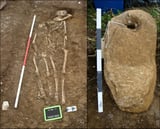
Phys.org • Aug 12, 2025
Ancient DNA reveals West African ancestry in early medieval England