Cassini Data Reveals Enceladus's Ocean Packed with Complex Organics, Boosting Life Potential
October 11, 2025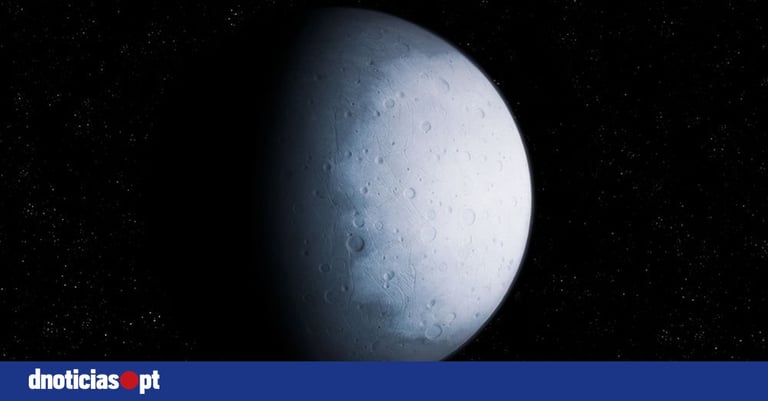


Recent analysis of ice grains collected by NASA's Cassini spacecraft from Enceladus's geysers reveals the presence of complex organic molecules, suggesting that these organics are readily available in the moon's subsurface ocean and not solely formed by space weathering.
This discovery of active chemical reactions in Enceladus's ocean, indicated by new complex organics, supports the hypothesis that the moon could be habitable.
The study reexamined data from 2008, when Cassini sampled particles ejected from Enceladus's thermal vents, which are believed to originate from beneath the icy surface.
These findings are based on observations from the Cassini mission, which concluded in 2017, involving collaboration among NASA, ESA, and ASI.
The detected molecules include aliphatic esters, heterocyclic esters, ethers, and nitrogen- and oxygen-bearing compounds, which are important precursors for life-related chemistry.
The presence of molecules necessary for forming lipids, essential components of cell membranes, further increases Enceladus's potential habitability.
Once considered merely an icy satellite, Enceladus is now regarded as one of the few places in the solar system that might support life, given these organic discoveries.
Future missions, including ESA's planned lander, aim to explore Enceladus's subsurface ocean more thoroughly to assess its habitability and potential for life.
Enceladus is suspected to have hydrothermal sources at its ocean floor, similar to Earth's Arctic hydrothermal vents, which could provide the energy necessary for life.
Previous detections of organic molecules in older particles raised questions about their alteration over time, but the new findings suggest these molecules originate from a younger, less altered source.
Over its 13-year orbit around Saturn, Cassini's Cosmic Dust Analyzer examined high-speed collisions of particles ejected from Enceladus, some of which had drifted into Saturn’s rings, while others were freshly ejected at speeds exceeding 64,000 km/h.
The enduring scientific value of Cassini's data, nearly two decades after collection, continues to fuel interest in icy moons like Enceladus as promising targets in the search for extraterrestrial life.
Summary based on 3 sources
Get a daily email with more World News stories
Sources

NASASpaceFlight.com • Oct 11, 2025
Scientists use Cassini data to discover new molecules in Enceladus water jets
Explorersweb • Oct 9, 2025
Discovery on Saturn’s Moon Hints at Possible Life in Space