Rutgers Researchers Unveil Biodegradable Plastics with Programmable Lifespans for Eco-Friendly Disposal
November 28, 2025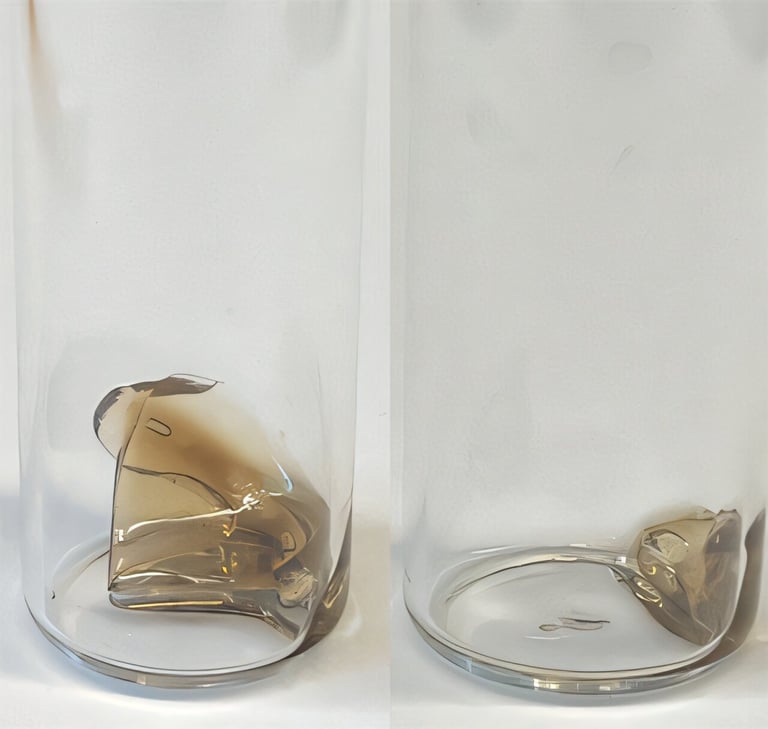

Potential applications span timed drug-release capsules and self-erasing coatings, with aims to adapt the method to regular plastics and existing manufacturing processes.
Other envisioned uses include takeout containers that degrade after disposal and long-lasting, recyclable structural plastics, though this work is still early and lab-focused.
The research opens possibilities beyond plastics, potentially informing timed drug-release systems and self-erasing coatings and influencing future manufacturing compatibility.
By pre-folding neighboring groups in specific orientations, researchers can set degradation timing from days to years for products with matched lifetimes such as fast-disintegrating packaging or long-lasting components.
The core idea is to pre-organize neighboring chemical groups around cleavable bonds so degradation is triggered more easily, while keeping material strength during use.
The approach relies on structural features that make bonds easier to break when desired, enabling post-use degradation without sacrificing initial performance.
The method is not yet ideal for durable, long-term materials like construction plastics that require multi-decade stability.
After degradation, short polymer fragments could potentially be reused or safely dissolve, rather than forming persistent waste.
By tweaking chemical additions, researchers can fine-tune how long a plastic remains intact before degrading, from days to months or years.
The study presents a toolkit for plastics that perform during use and degrade naturally afterward, aiming to reshape the plastic’s afterlife rather than erase its presence.
Experiments show pre-folding the polymer can accelerate bond degradation by thousands of times, with timing adjustable from days to years.
Controlling spatial arrangement of neighboring groups lets researchers tune degradation rate and decide whether activation is via ultraviolet light or metal ions.
Degradation can be triggered or accelerated by light or metal ions, adding an on/off control to the breakdown process.
The degradation preserves usefulness during use and remains strong until activation, with initial non-toxic results; further work is needed to confirm safety across the full life cycle.
The approach is particularly suited for short-lived applications such as food packaging where rapid, controlled degradation is advantageous.
The strategy works across various plastic forms, including flexible polymers and rigid thermoset networks, and can be toggled on or off with light or metal ions to adjust folding and neighboring interactions.
Rutgers researchers led by Yuwei Gu have developed biodegradable, programmable plastics that can be designed to self-destruct under everyday conditions without heat or harsh chemicals by mimicking natural polymer design principles.
In Nature Chemistry, the team reports plastics whose molecular bonds can be programmed to break down through conformational preorganization, a strategy inspired by natural polymers like RNA.
The method enables predefined lifespans for plastics, allowing controlled breakdown after use to reduce long-term environmental pollution.
Early tests indicate the breakdown products are non-toxic, though comprehensive environmental and lifecycle safety work remains.
This is not a ready-made fix for plastic pollution; more work is needed to assess environmental safety of degradation products and to integrate with commodity plastics and current manufacturing.
Challenges remain for commercial adoption, including proving non-toxic degradation products and enabling breakdown under ambient conditions rather than relying solely on UV light.
The approach mimics natural polymers like DNA by introducing artificial neighboring groups during synthesis to promote internal reactions that sever chains more easily than conventional plastics.
Published in Nature Chemistry, the study reflects collaborations across Rutgers and advances toward plastics that serve their function and then disappear, broadening the toolkit for smart, responsive polymers.
Summary based on 4 sources
Get a daily email with more Science stories
Sources

New Scientist • Nov 28, 2025
Plastic can be programmed to have a lifespan of days, months or years
Phys.org • Nov 28, 2025
New plastics designed to degrade on demand may help address global waste
Mirage News • Nov 28, 2025
Scientists Create Biodegradable Plastics to Fight Pollution
ScienceBlog.com • Nov 28, 2025
Plastics That Know When To Disappear