Global Effort to Save Indonesia's Sharks and Rays Combines Science, Policy, and Community Action
November 30, 2025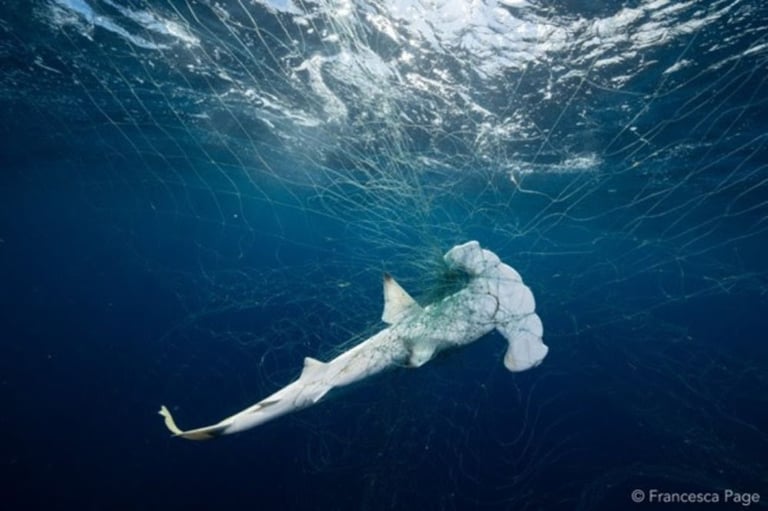

Project leaders commit to blending rigorous science with community partnerships and policy engagement to protect threatened species while supporting communities that depend on fisheries.
Funded by the Shark Conservation Fund, the initiative seeks to develop, test, and scale approaches to reduce fishing pressure on hammerhead sharks, wedgefish, threshers, and mobula rays.
Indonesia’s coastal communities rely on fisheries for food and livelihoods, including more than two million small-scale fishermen, underscoring the need for protections that don’t unduly harm rural poor populations.
The plan emphasizes locally led spatial protections and fisheries management aligned with national CITES implementation, backed by researchers, policymakers, and community groups across several provinces.
A three-year international collaboration led by Bangor University, with Indonesian partners KUL and IPB University, aims to recover shark and ray populations in Indonesia—the world’s largest shark‑fishing nation—through science‑based, community‑engaged management.
Two‑way training and knowledge exchange between Indonesian and British researchers illustrate an inclusive conservation model that benefits biodiversity and local livelihoods.
The project uses advanced methods to assess which management interventions work best, for whom, and why, ensuring evidence‑based and equitable conservation outcomes.
Shark and ray declines reflect broader ocean health challenges amid climate change, pollution, and overfishing, with global shark abundance having dropped by over 70% in five decades.
Summary based on 1 source