Power Grid Alert: Strong Solar Flare Sparks Warnings of Potential Disruptions to Earth Systems
December 2, 2025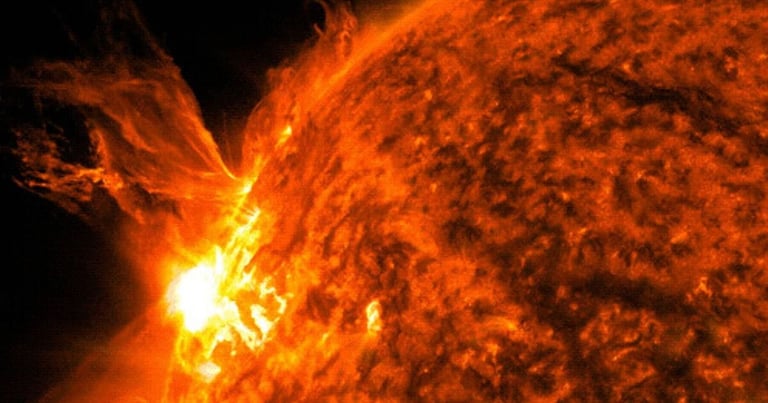


A strong solar flare, classified as X1.9, peaked on November 30, 2025, triggering warnings about potential disruptions to electrical grids and other Earth systems.
The Solar Dynamics Observatory captured images of the flare, which can propel coronal mass ejections that, if directed at Earth, may cause geomagnetic storms.
Geomagnetic storms from potential CMEs could affect power infrastructure, GNSS and HF communications, satellites, and space operations, with impacts possible 18 to 96 hours after the solar event.
Experts note that immediate radiation risk to people is low, but stronger future events could threaten aircraft electronics and aviation systems through interference with onboard memory and components.
Space weather officials stress the importance of monitoring data to understand how such events affect radiation levels in Earth’s atmosphere.
University of Surrey researchers described this as the strongest Ground Level Event since December 2006 and warned that even larger events are possible, underscoring preparedness for aviation and infrastructure.
The report notes NASA monitoring and related space news items to provide context, without altering the core warning of potential disruptions.
Researchers estimate energetic particles from similar events could cause about 60 errors per hour per gigabyte of data, highlighting vulnerability of aviation and data systems during intense solar activity.
NASA warned of potential impacts on technology and infrastructure, emphasizing the need to monitor solar activity and prepare for space weather events.
Technical impacts may include blackouts on power grids, disruptions to GNSS and HF communications, satellite surface charging and drag, and interference with spacecraft operations.
The event underscores NASA’s solar observation role and the ongoing collaboration with NOAA in monitoring space weather.
Geomagnetic storms can induce currents in power lines and pipelines, increase ionospheric ionisation affecting radio signals, and heat the thermosphere, impacting satellite orbits.
In addition to disruptions, solar activity can produce auroras visible in certain regions, with warnings of widespread service impacts depending on eruption direction and magnitude.
Warnings emphasize the potential for widespread disruptions to critical services and infrastructure, alongside possible aurora displays.
Solar flares can create spectacular auroras, providing a secondary, visual effect.
NASA acts as the Sun-observing research arm, while NOAA’s Space Weather Prediction Center provides official forecasts, watches, warnings, and alerts.
The flare is an X1.9, indicating a strong X-class event, with the number signaling its relative strength within that class.
Summary based on 5 sources
Get a daily email with more World News stories
Sources
Daily Mirror • Dec 2, 2025
NASA solar flare alert as blast from space could disrupt power grids worldwide
Express.co.uk • Dec 2, 2025
NASA issues major warning as 'strong' event could 'pose risks' and trigger blackouts
NASA Science • Dec 1, 2025
Strong Flare Erupts From Sun - NASA Science
Daily Express US • Dec 2, 2025
NASA warns solar flare 'will disrupt power grids and communications worldwide'