Iron-Air Batteries: The Future of Grid Storage and Renewable Energy Stability
December 3, 2025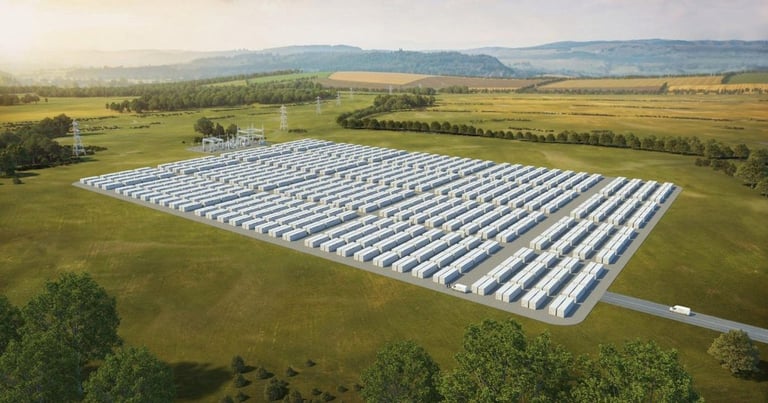

Iron-air batteries are positioned as a long-duration grid storage solution to store excess renewable energy and supply power during extended low-generation periods, addressing the mismatch between supply and demand.
Emerging as a promising long-duration storage option, iron-air aims to bridge multi-day gaps in renewable generation where lithium-ion falls short for grid-scale use.
Large-scale manufacturing targets, such as 1-2 GWh/year with possibilities of 5+ GWh, modular designs, and European pilots (e.g., Delft) to inform regulatory approval and interconnection.
Economic logic centers on reduced curtailment, arbitrage, capacity payments, and avoided transmission and infrastructure costs, with payback periods around 8-12 years versus longer for lithium-ion at similar discharge durations; revenue stacks across energy, capacity, ancillary services, and deferral needs.
Implementation challenges include limited power density (10-30 W/kg), high operating temperatures (200-300°C), large system size, slower response, and market barriers like lengthy validation, interconnection updates, and procurement cycles.
Mining and supply chains could shift, potentially boosting iron ore demand by 50-100 million metric tons annually if iron-air captures 20% of storage, while lithium and cobalt demand growth could slow.
Long-term deployment envisions growth from 1-5 GWh in the mid-2020s to 50-100 GWh annually by the early 2030s-2035, contingent on costs below $100/kWh and regulatory readiness.
Material supply advantages include abundant iron ore reducing geopolitical and price volatility risks, with regions like Australia and Brazil poised to gain strategic benefit from iron-based storage supply chains.
With 100+ hours of storage, they can stabilize grids when solar and wind fall short and have the potential to replace fossil-fuel peaker plants.
Economic and geopolitical gains stem from avoiding dependence on scarce rare earth minerals, using iron, air, and water, aligning with circular economy principles and more stable energy supply chains.
Geographic advantages suggest iron-producing nations could derive more value from battery-grade iron production and processing, with domestic steel industries enabling backward integration into storage manufacturing.
Recent deployments reflect real-world progress in 2025, including Ore Energy in Delft delivering the first grid-connected iron-air battery and Form Energy's commercial-scale plant in Weirton, WV, with utilities like Xcel Energy and Georgia Power placing orders.
Summary based on 2 sources
Get a daily email with more Science stories
Sources
Bizclik Media Ltd • Dec 1, 2025
The Rust Revolution: Can Iron-Air Batteries Save the Planet?
Discovery Alert • Dec 2, 2025
Iron-Air Batteries Revolutionising Long-Duration Renewable Energy Storage