Centaurin-11: A New Hope for Alzheimer's and Neurodegenerative Disease Treatment?
December 6, 2025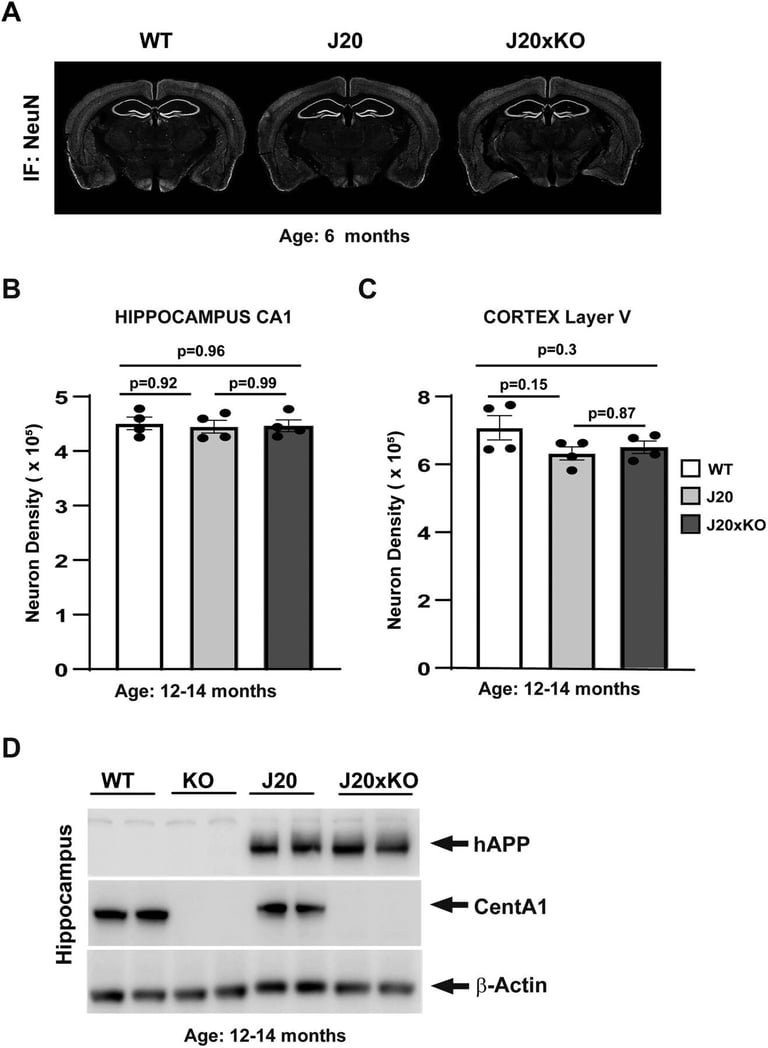

The research used the J20 mouse model of Alzheimer's and crossed it with Centaurin-11 knockout to assess impact, examining how removing Centaurin-11 affects disease progression.
By studying a model carrying familial Alzheimer's mutations, researchers evaluated whether Centaurin-11 elimination could slow progression in a genetically relevant context.
Overall, Centaurin-11 is viewed as a multifunctional regulator of signaling pathways that may drive metabolic deficits, neuroinflammation, amyloid processing, and connectivity dysfunction in Alzheimer's disease.
In disease-model brains lacking Centaurin-11, gene expression shifts toward a more normal profile, suggesting Centaurin-11 regulates multiple Alzheimer's-related pathways and brain signaling components.
Centaurin-11 deficiency in these models appears to normalize expression patterns across pathways implicated in Alzheimer's disease, reinforcing its regulatory role.
Adult reduction of Centaurin-11 may still slow disease progression, though confirmation in humans will require further work.
Scientists caution that more research is needed to understand how Centaurin-11 functions in the brain and whether adult-targeted reduction could slow progression in people.
Funding support comes from multiple foundations and institutions, including the Max Planck Institute and the National Institute on Aging.
The study appears in eNeuro, with the abstract noting that Centaurin-11 is required for progression of Alzheimer’s phenotypes in this model.
Mice without Centaurin-11 showed improved spatial learning and better hippocampal neural connectivity compared with disease-model peers still expressing Centaurin-11.
Region-specific effects were seen: significant plaque reduction in the hippocampus but not in the neocortex, indicating distinct brain-region mechanisms.
Beyond Alzheimer's, loss of Centaurin-11 also reduced symptoms in a mouse model of multiple sclerosis, hinting at broader relevance to neurodegenerative diseases.
These findings raise the possibility that Centaurin-11 could be a broader therapeutic target across neurodegenerative conditions.
Genetic deletion of Centaurin-11 led to 40% fewer hippocampal amyloid plaques, reduced neuroinflammation, and partial protection of hippocampal synapses, correlating with better spatial learning.
Overall, the absence of Centaurin-11 aligns behavioral gains with neuropathological benefits, supporting its potential as a therapeutic target to slow disease progression.
These behavioral and neuropathological improvements strengthen the case for pursuing Centaurin-11 inhibition as a therapeutic strategy in Alzheimer's disease.
Summary based on 2 sources
Get a daily email with more Science stories
Sources
Medical Xpress • Dec 5, 2025
Loss of brain protein eases Alzheimer's symptoms and brain damage in mice
Neuroscience News • Dec 6, 2025
Blocking a Key Protein Greatly Reduces Alzheimer’s Damage