WPI Innovates Carbon-Negative Concrete Alternative, Promising Greener Construction Future
December 6, 2025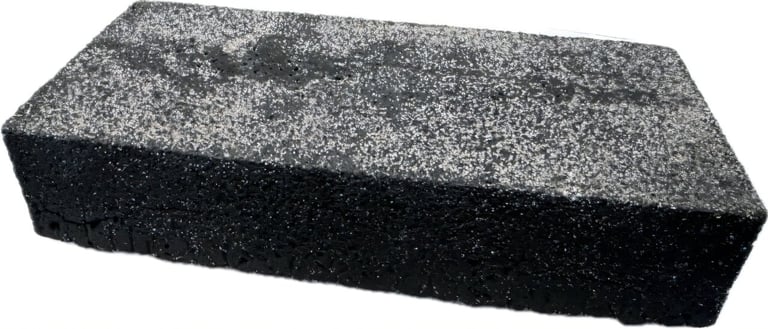

A Worcester Polytechnic Institute team has developed enzymatic structural material (ESM), a bio-inspired, carbon-negative alternative to traditional concrete that sequesters carbon during production.
The team introduces ESM as a carbon-negative, rapidly curing construction material produced via a bioinspired process that uses an enzyme to convert carbon dioxide into solid mineral particles bound and cured under mild conditions.
Context includes broader industry efforts and policy shifts, such as ongoing decarbonization initiatives by the American Cement Association and recent changes in U.S. DOE funding for cement-related clean energy grants.
Potential market impact spans affordable housing, climate-resilient construction, and disaster-relief infrastructure, where rapid, lightweight, carbon-negative materials can accelerate rebuilding and reduce environmental footprint.
The team plans to refine ecological efficiency, performance, and scaled production, noting that commercial adoption will require overcoming cost, engineering, and environmental impact challenges.
The hydrophobic capillary suspension approach enables rapid molding and potential mass production, with lower energy input and renewable biological components, aligning with carbon-neutral infrastructure goals and circular manufacturing.
ESM is tunable in strength, recyclable, and repairable, with potential applications including roof decks, wall panels, and modular building components, potentially reducing long-term construction costs and landfill waste.
Earlier attempts with hydrophilic polymer scaffolds faced weaknesses in humid conditions, leading to a switch to a hydrophobic scaffold using capillary suspension to grow CaCO3 crystals.
ESM sequesters more than 6 kilograms of CO2 per cubic meter produced, far exceeding conventional concrete emissions.
The production process of ESM achieves a net negative carbon balance of up to 6.1 kilograms of CO2 per cubic meter, versus conventional cement’s roughly 330 kilograms of CO2 per cubic meter.
ESM delivers a compressive strength of 25.8 MPa and cures in hours, suitable for roof decks and wall bricks.
The breakthrough is published in Matter (2025) by Shuai Wang and colleagues, highlighting low-energy production and renewable biological inputs aligned with carbon-neutral infrastructure goals.
ESM cures within hours and can be molded into structural forms, offering advantages over traditional concrete that requires high temperatures and weeks of curing.
Summary based on 2 sources
Get a daily email with more Science stories
Sources
Phys.org • Dec 6, 2025
New construction material absorbs CO₂ and sets quickly for sustainable building
CleanTechnica • Dec 6, 2025
New Bio-Inspired “Super Bricks” Sucks Up Carbon