Study Reveals Transcription Start Sites as Genetic Mutation Hotspots, Affecting Disease Risk
December 6, 2025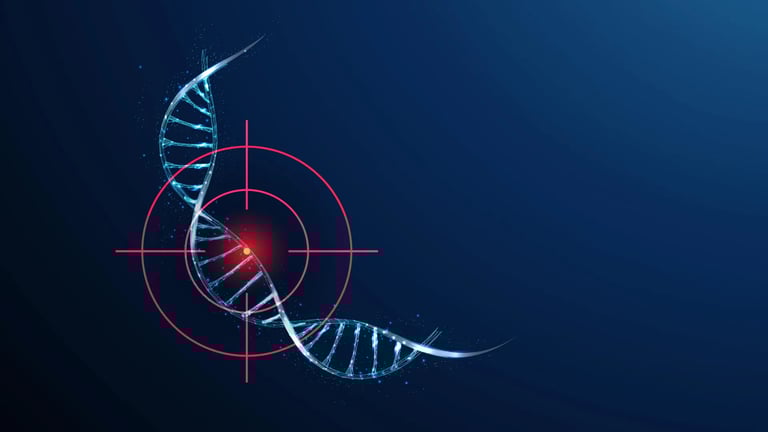

Natural selection filters start-site mutations over generations, decreasing their transmission as harmful changes are purged, with a stronger effect on brain and cancer-related genes.
Current mutational models may underestimate baseline mutation rates at transcription start sites, risking misinterpretation of which mutations are harmful or subject to selection.
Findings imply mutational models and clinical baselines should be recalibrated to account for higher start-site mutation rates and to avoid misclassifying variants or missing mosaic contributions.
Nature Communications study shows start-site sequences are highly mutation-prone and play an important functional role alongside protein-coding regions.
Start-site mutations can arise during early embryonic cell divisions as mosaic mutations, meaning they appear in only some cells but can be inherited if passed through egg or sperm, potentially leading to disease.
Many mutations originate early in development as mosaic mutations, affecting only a subset of cells but potentially being transmitted to offspring.
Mosaic start-site mutations, arising in early embryonic divisions, may be inherited if present in germ cells and can contribute to disease.
Mutations near transcription start sites show a strong excess of rare, recent variants, with natural selection reducing harmful mutations over generations, especially for brain- and cancer-related genes.
Standard child-only mutation filters miss mosaic mutations; researchers suggest examining co-occurrence patterns or re-evaluating mutations near start sites in highly affected genes.
A new study identifies transcription start sites as mutational hotspots, with the first 100 base pairs after a gene’s start showing a 35 percent higher mutation rate than expected by chance.
Researchers find that transcription start sites are genomic regions with a 35% higher mutation rate, making them unusually susceptible to genetic changes.
Mutations cluster at transcription start sites, especially in the first 100 base pairs after the start, at about 35% above expected rates.
The study was published in Nature Communications on November 26, following extensive data analysis across large genome datasets.
Overall, the findings add a crucial missing element to understanding germline mutations and have broad implications for genetic research, diagnostics, and the design of mutational models and disease studies.
The results broaden how we view how germline mutations arise and underscore the need to recalibrate models and study designs to account for start-site hotspots and mosaic mutations in disease research.
Rare start-site variants are more enriched, while older, common variants show less excess due to selective removal of deleterious changes.
Dr. Donate Weghorn notes the functional importance of start sites and the need to adjust analytical models to account for higher baseline mutation rates at these regions.
A large-scale analysis of 150,000 UK Biobank genomes and 75,000 gnomAD genomes, plus eleven family studies, reveals a higher accumulation of start-site mutations across the genome, especially in cancer, brain function, and limb development genes.
Data from UK Biobank, gnomAD, and family studies show excess start-site mutations across the genome, notably in genes linked to cancer, brain function, and abnormal limb development.
To improve detection, researchers propose analyzing co-occurrence patterns or revisiting discarded mutations near transcription starts in highly affected genes to capture mosaic events.
Findings challenge traditional de novo mutation identification in children by not accounting for mosaic mutations, prompting a rethinking of analysis approaches near start sites.
Mechanistically, start-site mutability arises because transcription is fast and chaotic, with paused or bidirectional transcription during early rapid cell divisions creating exposure to damage.
The hotspot exists because transcription near start sites involves pauses, restarts, and bidirectional activity, exposing DNA to damage during early development and creating transient mutations.
Rapid early embryonic transcription can leave unpatched mutations at start sites due to chaotic machinery and transient single-strand exposure.
Summary based on 3 sources
Get a daily email with more Science stories
Sources
ScienceDaily • Dec 3, 2025
A long-overlooked weak point in your DNA has just been revealed
SciTechDaily • Dec 5, 2025
Newly Discovered DNA “Danger Zone” Could Change What We Know About Human Disease
SSBCrack News • Dec 3, 2025
Researchers Identify Mutation Hotspots in Human Genome Linked to Disease Potential - SSBCrack News