New Lens Measurements Support Higher Hubble Constant, Challenge Early Universe Values
December 9, 2025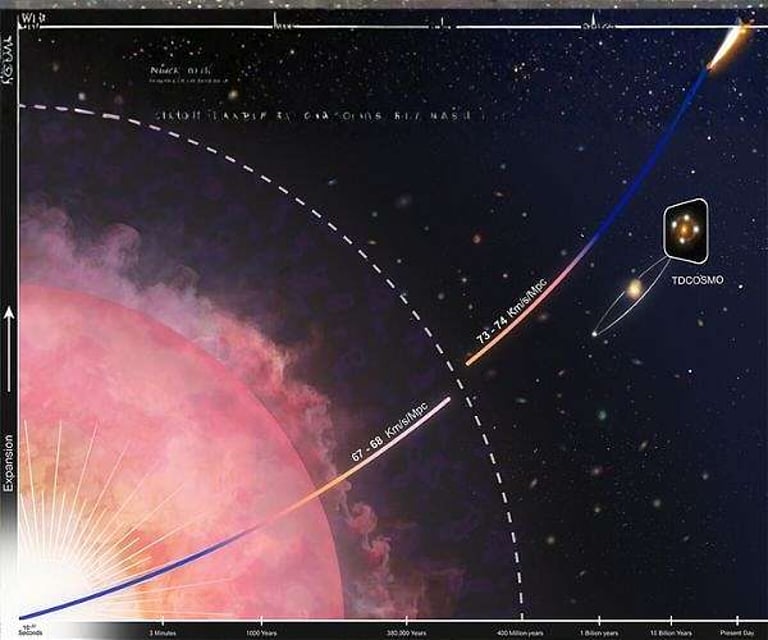

Using time-delay measurements from strong gravitational lenses, combined with detailed models of the lensing galaxy’s mass distribution, yields a Hubble constant estimate that aligns with late-universe measurements and sits higher than early-universe CMB values.
The method provides a Hubble constant value that is more consistent with local, late-universe observations and contributes to ongoing discussions about the Hubble tension with CMB-derived rates.
Time-delay cosmography compares delays between multiple lensed quasar images and, with mass models of the lens, derives the expansion rate independent of traditional distance ladders.
Efforts aim to push uncertainty below 1.5 percent by expanding the lens sample, refining time delays, and improving mass models, potentially offering decisive evidence on new physics.
Researchers from the University of Tokyo show that light-path differences around a massive lens enable precise timing measurements to infer the Universe’s expansion rate.
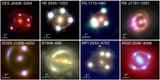
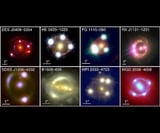
Eight lens systems in the study, incorporating data from both ground- and space-based observatories including JWST, sharpen measurements and guide plans to increase the sample.
The team intends to expand the lens sample and refine measurements to minimize systematics and rule out biases.
A major uncertainty comes from the mass distribution within lens galaxies, which can bias the inferred expansion rate if not correctly modeled.
KCWI spectroscopy of lens galaxies helps constrain stellar motions, addressing mass-sheet degeneracy and reducing key uncertainties in lensing analyses.
Eight strong-lens systems are used to measure the Hubble constant independently from traditional distance ladders.
Future work will broaden the lens sample and further suppress systematics to decisively settle the Hubble constant value.
The current result places the Hubble constant around 73 km/s/Mpc with roughly 4.5 percent precision, reinforcing a higher local expansion rate.
Summary based on 3 sources