Study Unveils Cross-Species Gene Sharing Behind Warbler Colors, Redefining Evolutionary Connections
December 11, 2025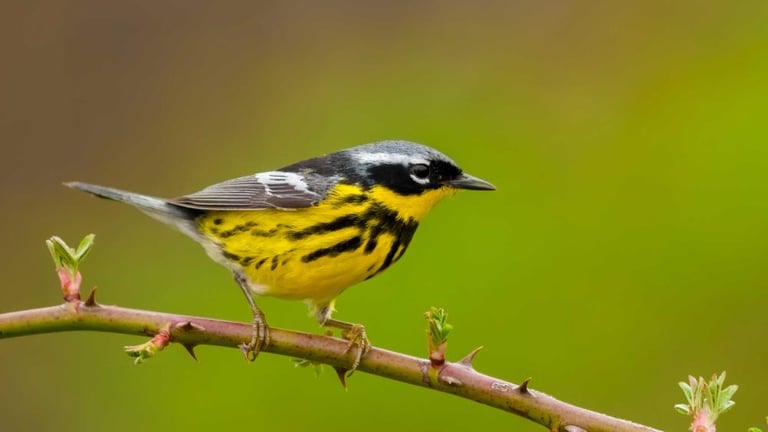

A Penn State-led study finds wood warblers show diversified colors because they exchanged color-related genes with evolutionary neighbors, not just within their own genus.
Beneficial genes move across species mainly through natural hybrids that backcross with parental species, allowing gene flow beyond a single lineage.
Researchers analyzed DNA from 400 warblers across 100 species, focusing on three carotenoid-related genes to trace gene movement, and compared gene-specific phylogenies with a whole-genome tree.
Dating and directionality suggest introgression from Leiothlypis occurred roughly half a million to two million years ago, with more recent, ongoing introgression into red-faced warblers.
The work appears in PLOS Biology (Dec. 11, 2025), led by David Toews and colleagues at Penn State, with NSF and Penn State funding; collaborators include Lan-Nhi Phung, Andrew Wood, Marcella Baiz, and Irby Lovette.
This pattern of horizontal gene transfer among neighboring species aligns with findings in other groups, signaling a broader evolutionary principle worth deeper study.
Looking ahead, researchers expect more cross-species gene sharing as genome data accumulate, painting a more interconnected view of evolutionary history.
Findings imply substantial cross-talk between lineages, with hybrids acting as conduits for beneficial mutations and complex trait development across species boundaries.
Ongoing work includes sampling more red-faced warblers to track introgression spread and ecological impacts, plus planned functional studies on the borrowed BCO2 variant.
Evidence points to a more recent introgression into red-faced warblers, currently being sampled to understand geographic spread and ecological effects.
Introgression of the BCO2 gene occurred across multiple lineages, including transfers from Leiothlypis to Setophaga and Cardellina, and from Vermivora to Geothlypis, with timing spanning hundreds of thousands to millions of years.
Some transfers date from about 0.5 to 2 million years ago, with the borrowed gene persisting through subsequent speciation.
Summary based on 6 sources
Get a daily email with more Science stories
Sources

Yahoo News • Dec 11, 2025
Songbirds swap colorful plumage genes across species lines among their evolutionary neighbors
Phys.org • Dec 11, 2025
Warblers borrow color-related genes from evolutionary neighbors, study finds
EurekAlert! • Dec 11, 2025
Warblers borrow color-related genes from evolutionary neighbors, study finds