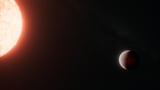
Webb Telescope Unveils "Wet Lava Ball" Planet TOI-561 b with Surprising Atmosphere
December 11, 2025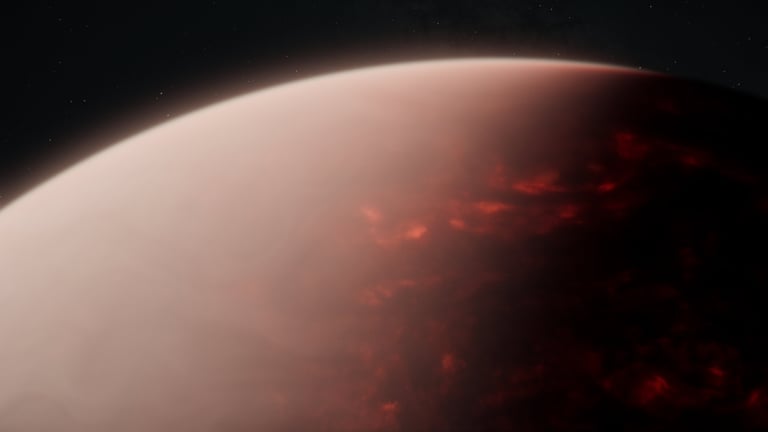

Previous coverage noted TOI-561 b’s unusual age and composition, reinforcing the notion that rocky planets have formed over a long span in the Milky Way.
The study’s findings were published in The Astrophysical Journal Letters on December 11.
The results challenge the notion that small, highly irradiated planets cannot retain atmospheres and provide insights into early-universe planet formation.
This work marks a significant step in understanding atmospheres on small, close-in rocky planets and revises assumptions about atmospheric retention under strong stellar radiation.
Possible formation and environmental scenarios include an iron-poor mantle, heat transfer via a thick atmosphere, and a magma ocean interacting with atmospheric gases, implying ongoing interior–atmosphere exchange.
TOI-561 b is about 1.45 Earth radii, roughly three Earth masses, classed as a super-Earth and believed to be around 10 billion years old.
NASA’s James Webb Space Telescope’s NIRSpec observations of TOI-561 b show a dayside cooler than bare-rock models would predict, indicating a volatile-rich atmosphere that absorbs and redistributes heat across the planet.
Webb data suggest TOI-561 b may retain a thick atmosphere, challenging the idea that ultra-short-period rocky planets cannot host substantial atmospheres.
The research was led by Johanna Teske of the Carnegie Earth and Planets Laboratory, with co-authors Anjali Piette and Tim Lichtenberg.
Researchers propose the atmosphere could be replenished over time, enabling studies of interiors and geological activity on extremely hot rocky planets through their atmospheres.
TOI-561 b is described as a “wet lava ball,” highlighting the exchange between molten surface processes and atmospheric gases.
The cooler dayside temperature, consistent with a global magma ocean interacting with atmospheric gases, points to a dynamic exchange between surface magma and the atmosphere.
Summary based on 4 sources
Get a daily email with more Science stories
Sources
Forbes • Dec 11, 2025
NASA Finds Evidence Of Atmosphere On Alien World 280 Light-Years Away
Phys.org • Dec 11, 2025
Ultra-hot super-Earth shows signs of thick atmosphere despite extreme conditions
NASA Science • Dec 11, 2025
NASA’s Webb Detects Thick Atmosphere Around Broiling Lava World - NASA Science