Cell-Selective mRNA Breakthrough: New Therapy Targets Cancer, Spares Healthy Cells
December 15, 2025

The platform redesigns the mRNA payload to be cell-selective, aiming to broaden the reach of mRNA therapies beyond cancer and reduce toxicity by using intrinsic cell selectivity rather than relying solely on delivery methods.
Researchers envision broad potential across cancer and other conditions, pursuing patent applications and moving toward commercialization and preclinical development.
The approach shifts from delivery improvements to engineering the mRNA payload itself for selective activation, with potential applications in cancer, inflammatory, and metabolic diseases.
The study lists authors such as Magdalena M. Žák and Lior Zangi, with funding from NantRNA and NIH grants R01 HL142768-01 and R01 HL149137-01.
In mouse cancer models, cSMRTS delivered via generic lipid nanoparticles showed high tumor selectivity, with over 100-fold higher gene activity in breast and colon tumors and more than 380-fold lower activity in liver and spleen compared with non-targeted expression.
The targeting mechanism relies on cancer-associated microRNA patterns to discriminate cancer from healthy cells; systemic delivery with generic lipid nanoparticles achieved strong tumor selectivity.
Systemic delivery using generic lipid nanoparticles yielded strong selectivity, with substantially higher activity in tumors and greatly reduced activity in major organs.
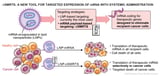
cSMRTS is an engineered mRNA system that uses a dual-mRNA setup: one encodes Cas6 with cancer microRNA recognition sites, and the other carries the therapeutic gene with a hairpin, so cancer cells silence Cas6 and activate the therapeutic mRNA while healthy cells keep Cas6 active and suppress it.
Researchers at Icahn School of Medicine at Mount Sinai reported cSMRTS, a cell-selective mRNA system that activates therapeutic genes only in targeted cells, demonstrated in mouse cancer models and published online in Molecular Therapy.
The two-mRNA design creates a cancer-cell–driven on/off switch, enabling selective activation of the therapeutic gene.
In mice, the approach produced a 45% reduction in tumor growth with a tumor-suppressor gene (PTEN) and up to 93% tumor reduction when combined with mRNA-based immunotherapy.
The system uses microRNA patterns as an internal on/off switch to achieve cell selectivity, reducing reliance on traditional delivery vehicles.
Summary based on 6 sources
Get a daily email with more Science stories
Sources
Phys.org • Dec 15, 2025
Scientists develop a smarter mRNA therapy that knows which cells to target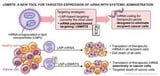
EurekAlert! • Dec 15, 2025
Scientists develop a smarter mRNA therapy that knows which cells to target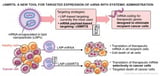
Newswise • Dec 15, 2025
Scientists Develop a Smarter mRNA Therapy That Knows Which Cells to Target | Newswise
News-Medical • Dec 16, 2025
First-of-its-kind mRNA system switches on therapeutic genes inside targeted cells