Adoptive Polar Bear Mom in Manitoba Raises Two Cubs Amidst Climate Challenges
December 17, 2025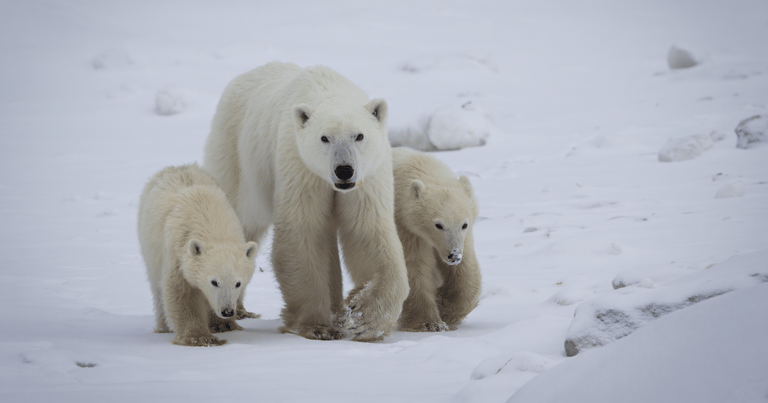


An adopting mother polar bear near Churchill, Manitoba, initially had one cub in spring and was later observed with two cubs in fall—the original tagged cub and an untagged cub whose biological mother scientists are attempting to identify through genetic samples.
Researchers expect the family to move to sea ice next, where the cubs will learn hunting skills for independence, highlighting the positive role of maternal care amid a warming Arctic.
The two cubs are about 10 to 11 months old and are likely to remain with their mother until roughly 2.5 years of age.
Hudson Bay has long been the most studied polar bear population, with more than 4,600 individual bears identified since the 1980s.
The adoption was noted by researchers led by Evan Richardson from Environment and Climate Change Canada after GPS collar tracking and field observations near Churchill, a key polar bear region.
The finding sits within the broader context that polar bears are listed as vulnerable by the IUCN, with sea ice loss as a major threat to their survival.
Scientists view the behavior as a positive example of care beyond direct kin, contributing to discussions about polar bear resilience in the face of climate-driven ice loss.
Experts describe the behavior as an intriguing aspect of polar bear life history, illustrating care possibilities beyond biological ties.
Polar Bears International and ongoing tagging confirm the sightings, with researchers calling the event a 'beautiful story' of maternal behavior.
The adopting bear is designated X33991, equipped with a GPS collar to monitor movement, denning, and feeding as part of a program involving the University of Alberta and Environment and Climate Change Canada.
The long-term study, involving multiple agencies, tracks bears via GPS and makes some data publicly accessible, underscoring ongoing climate-related pressures on western Hudson Bay polar bears.
The western Hudson Bay subpopulation has declined about 30% since the 1980s, from around 1,200 to roughly 800, a trend linked to accelerated sea ice melt crucial for survival.
Summary based on 7 sources
Get a daily email with more World News stories
Sources
The Guardian • Dec 17, 2025
Scientists log rare case of female polar bear adopting cub: ‘They’re really good moms’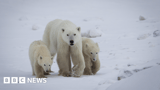
BBC News • Dec 17, 2025
Polar bear mother adopts cub in rarely documented case