Patagonian Pumas Shift Prey to Penguins, Stirring Up Ecosystem Dynamics
December 17, 2025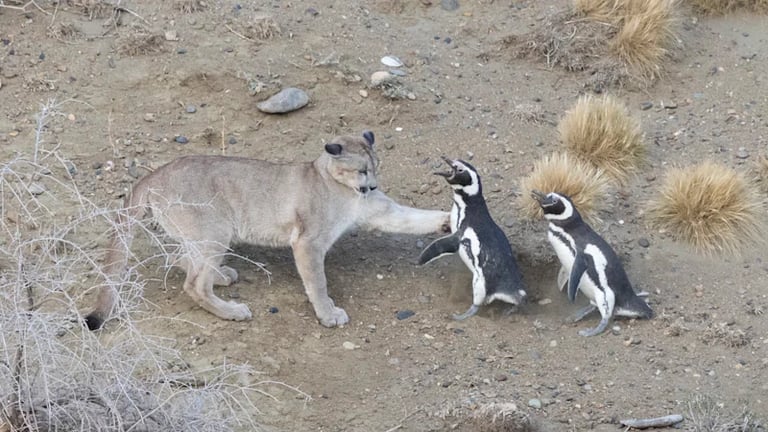


Penguin presence correlates with higher social tolerance among pumas, who are about three times more likely to interact near penguin colonies than in other areas.
Penguins as a new prey source may trigger broader ripple effects, potentially altering predator–prey relationships with guanacos and shaping ecosystem dynamics.
The findings urge cautious, nuanced expectations about the ecological benefits of carnivore restoration and the complex responses of ecosystems.
These behavioral shifts raise questions about broader ecological consequences, including potential impacts on guanacos and the penguin population, which appears stable or increasing so far.
A study in Proceedings of the Royal Society B shows Patagonian pumas increasingly preying on Magellan penguins along the Monte León National Park coast, signaling a broader behavioral shift in response to abundant prey.
Pumas that prey on penguins engage with each other far more often than non-penguin-eating pumas, with 254 encounters versus four, suggesting reduced competition for this food source.
Rangers from Monte León National Park supported the research, illustrating how conservation efforts can influence predator-prey dynamics and overall ecosystem structure.
The study underscores the need to monitor Monte León’s ecological dynamics to understand potential long-term effects on pumas and penguin colonies.
Researchers emphasize that penguin predation is surprising yet plausible and discuss wider implications for wildlife restoration and management.
Published in 2025 in Proceedings of the Royal Society B, the findings inform conservation planning by highlighting how trophic subsidies and ecosystem changes influence predator behavior and social structure.
Future work will investigate how puma-penguin dynamics affect other prey, like guanacos, to understand cascading effects in the ecosystem.
Both puma and penguin densities appear stable or growing, indicating a persistent ecosystem shift rather than a temporary anomaly.
Summary based on 6 sources
Get a daily email with more World News stories
Sources

The Sydney Morning Herald • Dec 18, 2025
Penguins become prey for the pumas of Patagonia
ABC News • Dec 17, 2025
Puma populations are on the rise in Patagonia, now targeting penguins as prey
Animals • Dec 16, 2025
Pumas came back to Patagonia—and met penguins. What happened next surprised scientists.
Live Science • Dec 17, 2025
Pumas in Patagonia started feasting on penguins — but now they're behaving strangely, a new study finds