CaBLAM Revolutionizes Neuroscience with High-Contrast Brain Imaging Without External Light
December 28, 2025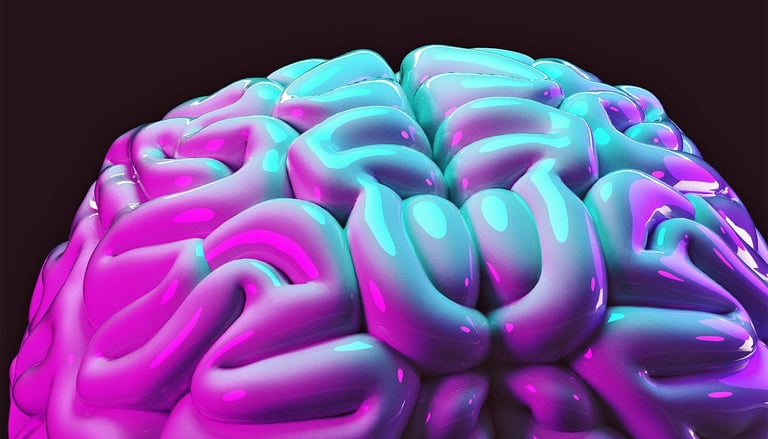

CaBLAM is a bioluminescent imaging system that lets researchers monitor neural activity at single-cell and subcellular levels without external illumination, offering a clearer view of brain signals.
Compared with fluorescence, bioluminescence has advantages such as no external light exposure, no photobleaching, reduced phototoxicity, and less scattering and background noise, yielding higher-contrast signals in tissue.
CaBLAM uses a bioluminescent calcium sensor designed by Nathan Shaner and colleagues, enabling neurons to emit light correlated with calcium activity for multi-hour recordings.
The project is a collaborative effort with at least 34 scientists from Brown University, Central Michigan University, UC San Diego, UCLA, New York University, and other institutions.
This multi-institution collaboration reflects a broad initiative to advance bioluminescence-based neuroscience tools, supported by NIH, NSF, and the Paul G. Allen Family Foundation.
The technology enables observation of activity within different parts of a neuron and could support studying brain processes during complex behaviors or learning with fewer hardware requirements.
Beyond neuroscience, CaBLAM and related calcium-sensing tools may be applied to study activity in other body tissues, expanding potential biomedical uses.
The study demonstrates continuous five-hour recordings in living mice and zebrafish, capturing activity across neuronal networks and subcellular regions in real time.
The work is documented in Nature Methods under the title CaBLAM: a high-contrast bioluminescent Ca2+ indicator, derived from engineered luciferase, with funding from NIH, NSF, and the Paul G. Allen Family Foundation.
CaBLAM enables recording from individual neurons for hours and within subcellular compartments, opening new avenues for research on learning, behavior, and brain-body communication.
Nathan Shaner led the molecular design, with Chris Moore highlighting CaBLAM’s potential to visualize single-cell activity like a high-sensitivity movie, and to observe activity inside living animals over extended periods.
The Bioluminescence Hub at Brown University’s Carney Institute for Brain Science, established in 2017 with NSF support, has unified researchers to develop light-emitting neural tools and share them with the broader community.
Summary based on 3 sources
Get a daily email with more Science stories
Sources
ScienceDaily • Dec 19, 2025
Glowing neurons let scientists watch the brain work in real time
SciTechDaily • Dec 28, 2025
This New Tool Lets Scientists Watch the Brain Think
Futurity • Dec 28, 2025
Tool uses light to measure activity in living brain cells