Ocugen's Gene Therapy Shows Promise for Stargardt Disease in Phase 1 Trial
January 12, 2026

Ocugen’s three-submission strategy envisions completing enrollment in Q1 2026 and pursuing a BLA in H1 2027 as part of accelerating therapy availability.
Results suggest a favorable safety profile and potential structural/functional benefits, with the approach potentially slowing macular atrophy and preserving central vision in STGD1.
Three dose cohorts (low, medium, high) used 200 μL subretinal injections; primary aim was safety/tolerability, with exploratory endpoints including changes in DDAF lesion area and BCVA over 12 months.
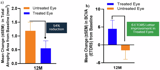
Efficacy signals show treated eyes had 54% slower atrophic lesion growth and a 0.10 mm/year vs 0.19 mm/year expansion, with a net gain of +6 letters in BCVA at 12 months compared to a decline in controls.
GARDian3 Phase 2/3 trial is progressing, with enrollment expected to complete in early 2026 and a planned BLA filing in the first half of 2027 as part of a three-regulatory-submission plan.
The trial aims for a three-year cadence of regulatory submissions alongside continued progress in the GARDian3 program.
Ocugen reports Phase 1 GARDian1 results for OCU410ST, a modifier gene therapy for Stargardt disease, published in Nature Eye.
Nine patients were treated; eight completed the 12-month visit, with no drug-related serious adverse events and mostly mild to moderate treatment-emergent AEs linked to procedure or disease.
Forward-looking statements acknowledge risks and uncertainties around data maturity, regulatory timelines, and possible differences between early results and final data.
OCU410ST uses an AAV5 vector to deliver the RORA gene to the retina, aiming to modulate disease pathways independent of ABCA4 mutations.
The first-in-human trial evaluated safety and exploratory efficacy of the therapy across three dose cohorts, with subretinal injections and measurements over 12 months.
Among six BCVA-evaluable patients, treated eyes gained +6 letters while untreated eyes declined by 1.5 letters, with 100% of treated eyes maintaining or improving vision at 12 months.
Summary based on 5 sources
Get a daily email with more Science stories
Sources

Yahoo Finance • Jan 12, 2026
Ocugen Announces Publication of Phase 1 GARDian1 Trial Results for OCU410ST Modifier Gene Therapy
GlobeNewswire • Jan 12, 2026
Ocugen Announces Publication of Phase 1 GARDian1 Trial Results for OCU410ST Modifier Gene Therapy
The Manila Times • Jan 12, 2026
Ocugen Announces Publication of Phase 1 GARDian1 Trial Results for OCU410ST Modifier Gene Therapy