New Insights into Embryogenesis Could Revolutionize Assisted Reproductive Technologies
January 14, 2026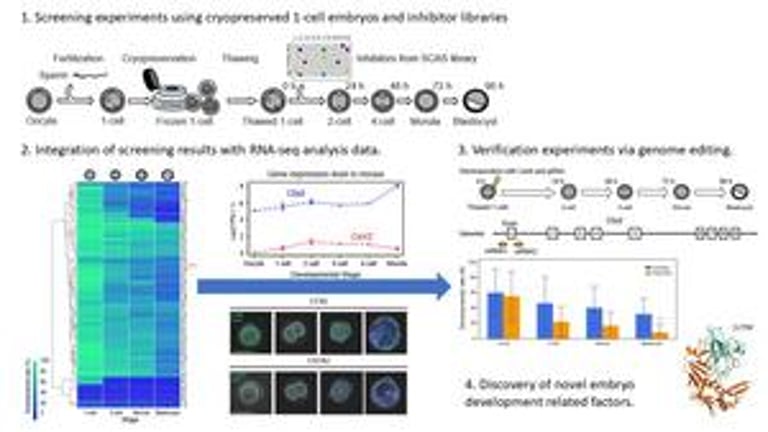

The findings, published in Frontiers in Cell and Developmental Biology on October 17, 2025, highlight the comprehensive methodology and the discovery of the critical factors underlying early zygote development.
Among the identified factors, two molecules—CXCR2 and CTSD—were selected for functional validation; CRISPR-Cas9 knockout of either gene arrests development at the preimplantation stage, underscoring their essential roles in early embryogenesis.
The study used a large cohort of genetically uniform mouse zygotes that were cryopreserved as single cells, enabling high-throughput inhibitor screening and integration with transcriptomic data to pinpoint regulatory factors.
The research is documented with a DOI and is published in Frontiers in Cell and Developmental Biology (2025).
Infertility affects about one in six people worldwide, underscoring the importance of understanding molecular regulators of fertilization, early development, and implantation to improve ART outcomes.
Future work will address limitations such as the effects of inhibitor concentration and cryopreservation-induced stress, and will expand screening with broader chemical libraries to pursue molecular-level control of embryo development for infertility treatment and developmental biology research.
A new study points to previously unrecognized regulatory factors governing early embryogenesis and suggests that precise molecular control could modulate embryonic development, with potential implications for next-generation assisted reproductive technologies (ART).
Researchers linked inhibitor screening results with RNA-seq data to map a regulatory network guiding early development, identifying candidate factors that were not previously recognized.
A Kanazawa Medical University team led by Associate Professor Hirofumi Nishizono and graduate student Masaki Kato identified eleven novel factors essential for mouse zygote development using a multi-faceted approach that combined one-cell embryo cryopreservation, inhibitor screening, RNA-seq analysis, and CRISPR-Cas9 gene editing.
Summary based on 2 sources
Get a daily email with more Science stories
Sources
Phys.org • Jan 14, 2026
Eleven novel factors essential for mouse zygote development discovered
EurekAlert! • Jan 14, 2026
Discovery of eleven novel factors essential for mouse zygote development